
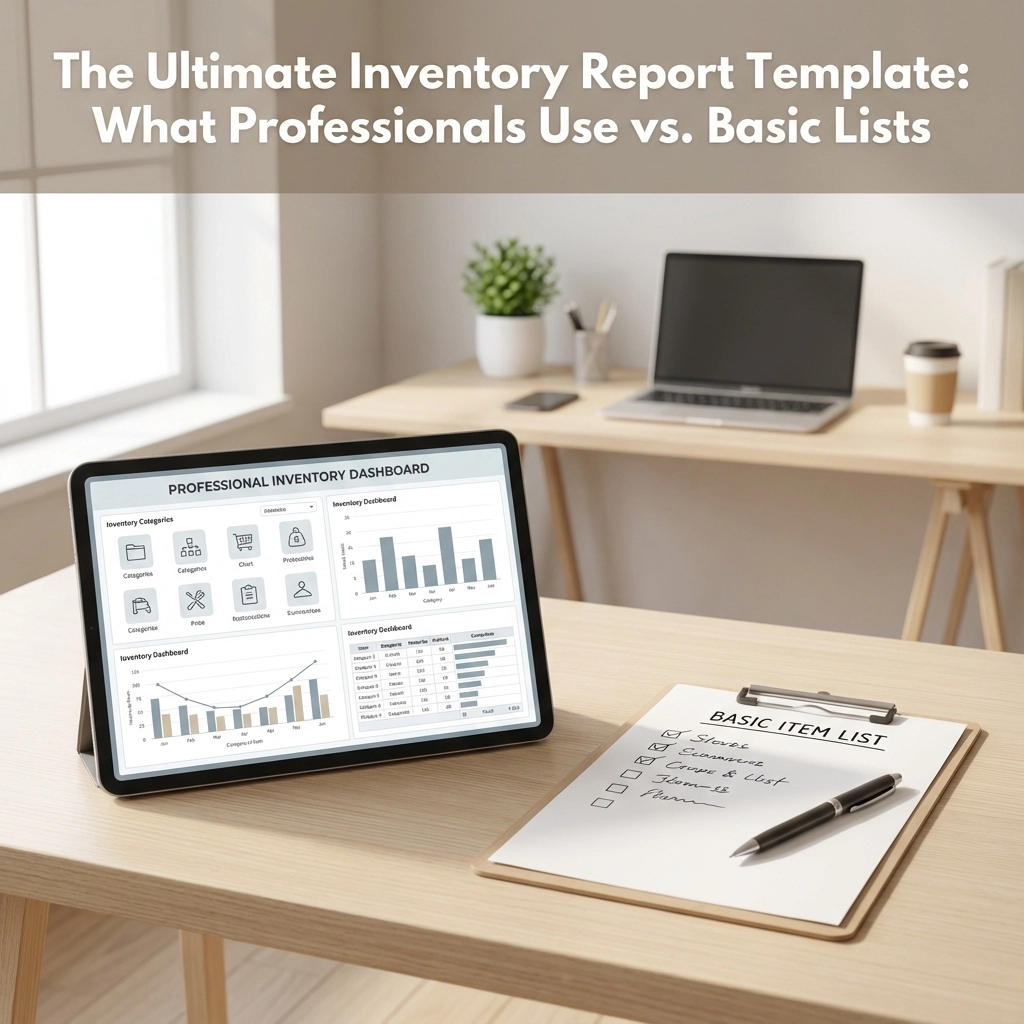
Property inventory reports serve as the cornerstone of successful tenancy management, yet many landlords still rely on basic checklists that leave them vulnerable to deposit disputes and regulatory non-compliance. With the Renters' Rights Act 2026 introducing stricter documentation requirements, understanding the difference between a simple inventory list and a comprehensive property inventory report template has never been more crucial.
The gap between amateur documentation and professional standards can cost you thousands in disputed deposits, legal challenges, and failed compliance audits. Let's examine what separates basic inventory attempts from the robust templates that property professionals rely on.
What Basic Property Inventory Lists Actually Contain
Most DIY property inventory lists follow a simple room-by-room format with basic item identification. You'll typically find columns for room names, item descriptions, quantities, and perhaps a brief condition note like "good" or "fair." These templates often include:
- Simple item listings (sofa, table, carpet)
- Basic condition ratings (1-5 scale or good/fair/poor)
- Room-by-room organisation
- Basic photo attachment points
- Tenant signature lines

Basic templates appeal to landlords because they're straightforward and quick to complete. However, this simplicity creates significant legal vulnerabilities. When deposit disputes reach adjudication, these basic lists rarely provide sufficient detail to defend your position against tenant challenges.
The fundamental problem with basic inventory lists lies in their subjective nature. Describing a carpet as "fair condition" means nothing in a legal context. What constitutes "fair" to you might be "poor" to a tenant or "good" to an adjudicator. Without detailed descriptions, photographic evidence, and standardised assessment criteria, these lists become worthless in dispute situations.
Professional Property Inventory Report Templates: The Gold Standard
Professional inventory report templates transform simple lists into comprehensive legal documents that withstand scrutiny. These sophisticated tools include multiple layers of protection and detail that basic lists cannot match.
Detailed Condition Assessment Matrices
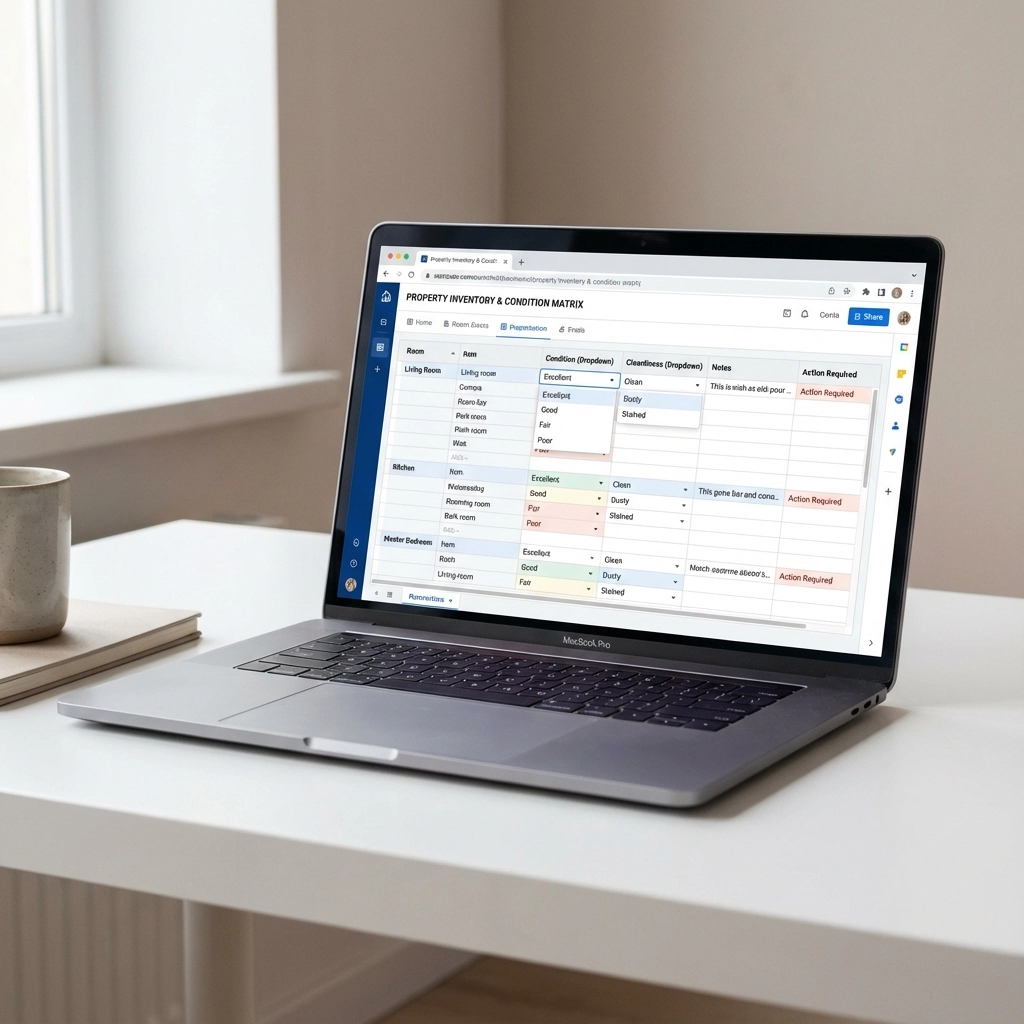
Professional templates employ standardised condition assessment criteria with specific descriptions for each rating level. Instead of vague terms, you'll find detailed descriptions like "Minor scuff marks on paintwork consistent with normal occupation" or "Carpet shows moderate wear patterns in high-traffic areas with no staining or damage requiring replacement."
These templates include photographic requirement specifications, mandating multiple angles, close-up details of any imperfections, and standardised lighting conditions. Each item receives individual assessment codes that correspond to detailed condition libraries, creating consistency across all properties in your portfolio.
Regulatory Compliance Integration
Professional property inventory report templates build in compliance with current and emerging regulations. They include specific sections for Awaab's Law compliance, documenting ventilation systems, humidity levels, and potential condensation risks. With the Renters' Rights Act 2026 approaching, these templates ensure you're capturing all required information from day one.
Legal disclaimer sections, witness requirements, and dispute resolution procedures are embedded within the template structure. This integration eliminates the risk of missing crucial legal elements that could invalidate your inventory in dispute proceedings.
Advanced Documentation Features
Professional templates incorporate meter readings, utility account details, and service provider information. They document the condition of gardens, external areas, and communal spaces that basic lists often overlook. Security features like alarm codes, key quantities, and access arrangements receive dedicated sections with clear handover procedures.
The templates include maintenance history integration, allowing you to reference previous inspection reports and track property condition changes over time. This longitudinal documentation proves invaluable when distinguishing between fair wear and tear and tenant-caused damage.
Why Template Quality Directly Impacts Your Bottom Line
The financial implications of inventory quality extend far beyond the initial documentation cost. Poor inventory reports consistently lose deposit dispute cases, with landlords facing not only deposit refunds but also adjudication fees and legal costs.
Professional templates reduce dispute frequency by establishing clear, documented baselines that tenants understand and accept. When disputes do arise, comprehensive documentation typically resolves matters quickly in your favour, avoiding lengthy adjudication processes.

Insurance implications also favour professional documentation. Many insurance policies require detailed inventory reports for claim validation. Basic lists rarely meet these requirements, potentially voiding coverage when you need it most.
From a time management perspective, professional templates actually reduce long-term administrative burden. While they require more detailed initial completion, they eliminate the need for supplementary documentation, dispute preparation, and legal consultation that basic lists often require.
The Hidden Costs of DIY Property Inventory Reports
Many landlords attempt DIY inventory reporting to save money, but this approach consistently proves more expensive than professional services. DIY inventories frequently miss critical details, use non-standard terminology, and fail to capture sufficient photographic evidence.
The time investment for proper DIY inventory completion often exceeds 6-8 hours per property when done correctly. This doesn't include the learning curve for understanding legal requirements, photography standards, and documentation best practices.
Legal vulnerability represents the greatest hidden cost. DIY inventories rarely withstand professional legal challenge, leaving landlords exposed to significant financial losses in deposit disputes.
Our Professional Template: Bridging the Gap
We've developed a comprehensive property inventory report template that incorporates professional standards while remaining accessible to property managers who understand the value of detailed documentation. Our template includes:
- Standardised condition assessment criteria with detailed descriptions
- Integrated photographic requirement guidelines
- Regulatory compliance checklists for 2026 requirements
- Legal disclaimer and dispute resolution procedures
- Maintenance history tracking capabilities

However, we strongly recommend professional inventory completion even with superior templates. The expertise required for accurate assessment, appropriate photography, and legal compliance typically exceeds what property managers can develop internally.
Our professional inventory services combine template excellence with expert execution, ensuring your inventories meet the highest professional standards while saving you time and reducing legal exposure.
Technology Integration in Modern Inventory Templates
Contemporary professional templates integrate with property management software, enabling automatic data population and cross-reference checking. Mobile-optimised versions allow real-time completion with instant photo upload and GPS location tagging.
Cloud-based storage with automatic backup ensures your inventory reports remain secure and accessible when needed for dispute proceedings or insurance claims. Version control features track changes and maintain audit trails that satisfy regulatory requirements.
Digital signature capabilities eliminate the need for physical presence while maintaining legal validity. Integration with tenant communication platforms enables automatic report sharing and acknowledgement tracking.
Legal Defensibility: The Ultimate Test
The true measure of any inventory report template lies in its legal defensibility during dispute proceedings. Professional templates consistently perform better in adjudication because they provide objective, detailed evidence that satisfies legal burden-of-proof requirements.
Adjudicators specifically look for detailed condition descriptions, comprehensive photographic evidence, and standardised assessment criteria. Basic templates rarely meet these requirements, while professional templates are designed around legal defensibility principles.
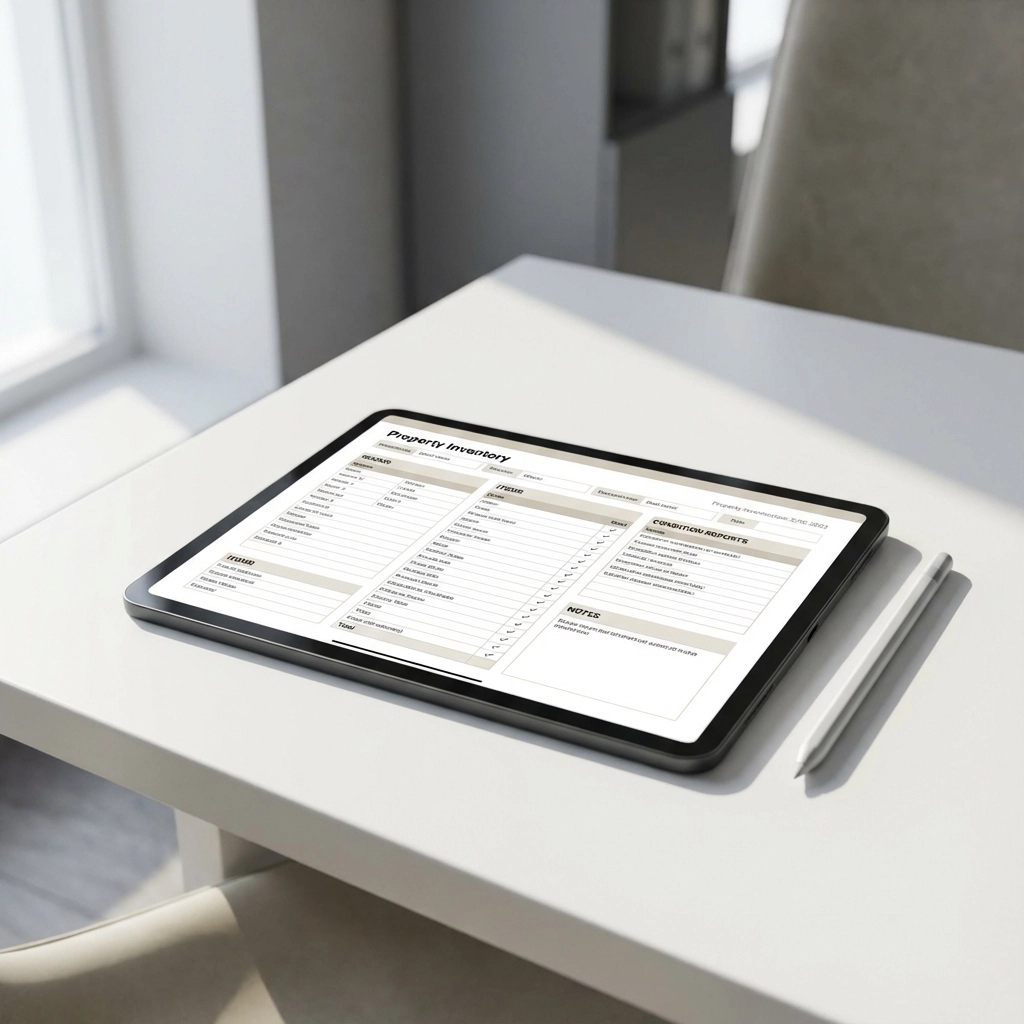
The investment in professional inventory documentation pays for itself through reduced dispute losses, faster resolution times, and improved tenant relationships built on clear, fair documentation practices.
Conclusion: Templates Are Tools, Expertise Is Essential
While professional property inventory report templates provide superior frameworks compared to basic lists, the template itself is only as valuable as the expertise applied in its completion. The nuanced understanding of property condition assessment, legal requirements, and photographic standards requires professional training and experience.
Download our professional template to understand the documentation standards required for effective property inventory reporting. However, remember that professional inventory services provide the expertise necessary to maximise your template's legal and financial protection.
The difference between basic lists and professional templates is clear – but the difference between DIY completion and professional execution is where your property investment's protection truly lies.
Join The Discussion