
If you are a private landlord, Legionella should sit firmly on your property compliance checklist. It may not be as visible as an alarm or an overflowing gutter, but poorly managed water systems can create a serious health risk for tenants.
The good news is that most standard rental properties do not require complicated laboratory testing or a dramatic folder labelled “Legionella Emergency”. What you do need is a proportionate assessment, sensible control measures and clear records.
This guide explains the legionella assessment for landlords in 2026, including your legal duties, what the assessment should cover, likely costs and when professional support makes sense.
Important: This article provides general guidance for residential landlords. It is not a substitute for specific legal, health and safety or water hygiene advice.
What is Legionella and why does it matter to landlords?
Legionella is a type of bacteria that can grow in water systems. People can become exposed when contaminated water creates fine droplets or aerosols, such as those produced by showers and spray taps.
The bacteria are more likely to multiply where water is stored or allowed to remain warm and stagnant. Common risk factors include:
- Hot water stored at an unsuitable temperature
- Cold water becoming warmer than it should be
- Infrequently used taps, showers or outside hoses
- Redundant pipework, sometimes called dead legs
- Poorly maintained showerheads and hoses
- Long vacant periods between tenancies
- Large or complex communal water systems
A standard flat with a mains-fed combi boiler and regularly used outlets will often present a low risk. However, “low risk” does not mean “no need to think about it”. You still need to consider the water system and take reasonable steps to manage any foreseeable risk.
That straightforward distinction is important: compliance is about appropriate action, not collecting paperwork for its own sake.
Are landlords legally required to carry out a Legionella risk assessment?
Yes. Landlords who rent out residential property have a legal responsibility to assess and control risks to their tenants, including the risk of exposure to Legionella from the water system.
The duty is supported by:
- The Health and Safety at Work etc. Act 1974
- The Control of Substances Hazardous to Health Regulations 2002 (COSHH)
- The HSE’s Approved Code of Practice L8
- HSE guidance in HSG274 Part 2, which covers hot and cold water systems
There is no specific law requiring you to obtain a document called a “Legionella certificate”. The Health and Safety Executive does not prescribe a particular certificate or standard form.
However, you must be able to demonstrate that you have considered the risk and acted appropriately. A written assessment is therefore strongly recommended, even where your conclusion is that the risk is low.
The legal principle is simple:
- Assess the water system.
- Identify any foreseeable risks.
- Put suitable controls in place.
- Review the assessment when circumstances change.
Ignore those steps and you are leaving both your tenants and your own liability position unnecessarily exposed.
What should a landlord Legionella risk assessment include?
A suitable assessment should be specific to the property. A generic document downloaded from the internet may look tidy, but it cannot accurately describe a water system that nobody has inspected.
Your assessment should consider the following areas.
1. Describe the hot and cold water system
Record how water is supplied, stored and distributed throughout the property.
For example, identify whether the property has:
- A mains-fed combi boiler
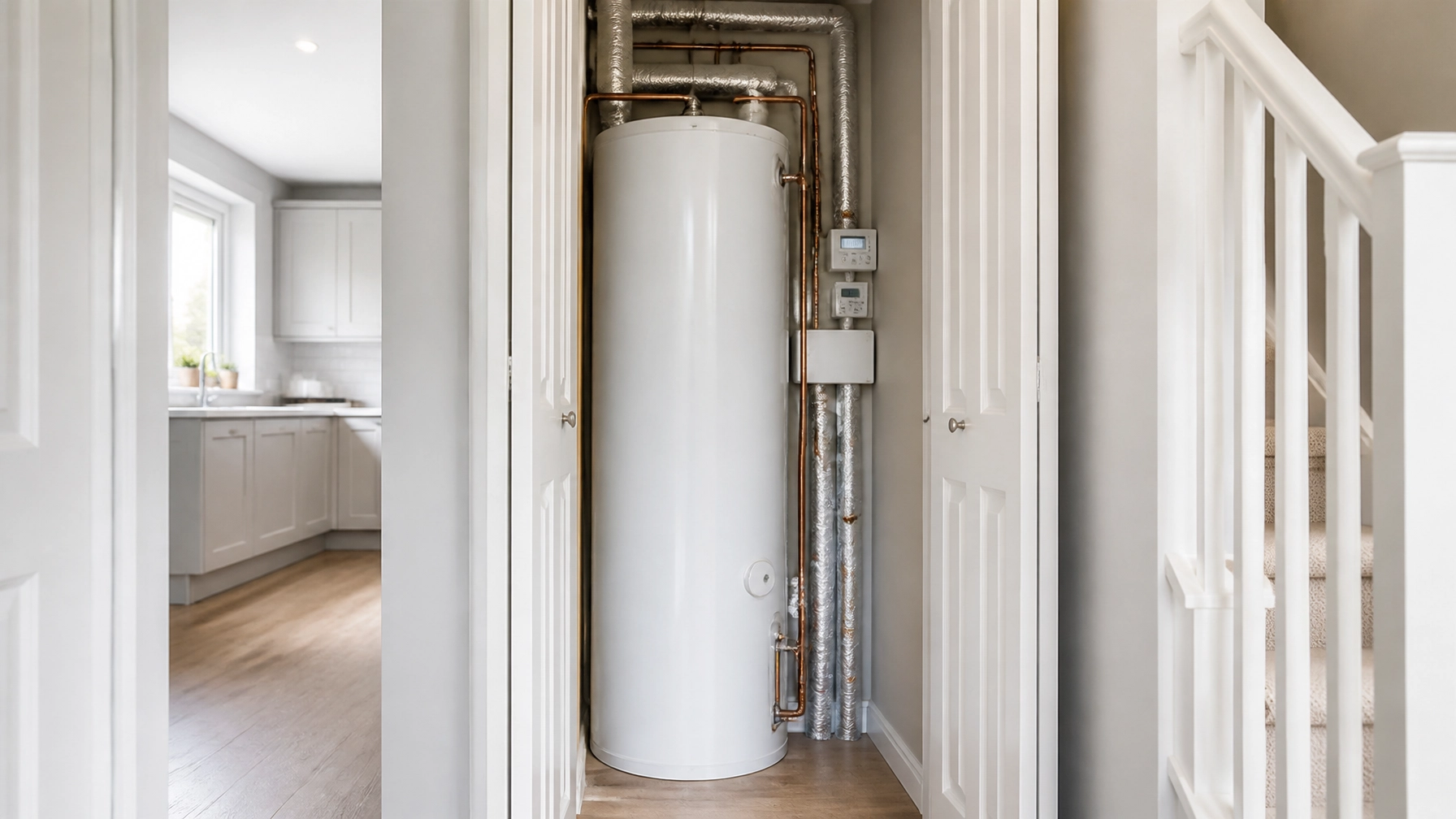
- A hot water cylinder
- A cold water storage tank
- Communal or shared water systems
- Pumps or circulation systems
- Multiple bathrooms or little-used outlets
A modern one-bedroom flat may have a relatively simple system. A large house with stored water, several bathrooms and an outbuilding will require a more detailed review.
2. Identify conditions that could encourage bacterial growth
Focus on water temperatures, stagnation and system cleanliness.
As a general control principle:
- Hot water should be stored at around 60°C or above
- Hot water should reach outlets at approximately 50°C or above, subject to suitable safeguards against scalding
- Cold water should ideally remain below 20°C
- Little-used outlets should be flushed appropriately
- Showerheads and hoses should be cleaned and descaled
- Redundant pipework should be removed where practicable
Do not adjust temperatures blindly. Scalding is also a serious risk, particularly for children, older people and vulnerable occupants. Where necessary, obtain competent advice to balance Legionella control with safe water delivery.

3. Consider who could be exposed
Your tenants, visitors and contractors may all be exposed to the water system.
Take extra care where occupants may be more vulnerable, including older people, young children or individuals with compromised immune systems or certain underlying health conditions.
You do not need to investigate tenants’ private medical information. You should, however, recognise that the same water system may present a different level of concern depending on the people using it.
4. Document control measures and actions
If you identify an issue, record what needs to happen, who is responsible and when it should be completed.
For example:
- Flush a seldom-used shower before a new tenancy
- Clean and descale shower fittings
- Investigate an unusually warm cold-water outlet
- Remove an unused section of pipework
- Check that a water tank is properly covered and maintained
- Arrange specialist advice for a complex communal system
A useful assessment does more than identify problems. It gives you a practical route to resolving them.
How often should a Legionella assessment be reviewed?
There is no universal legal rule requiring every private landlord to commission a new assessment every 12 months. Be cautious of anyone insisting that an annual “certificate” is automatically required for every domestic property.
You should review the assessment when there is reason to believe it may no longer be valid. This includes:
- A change to the boiler, cylinder, tank or pipework
- Alterations to bathrooms or kitchens
- A change in tenancy or occupancy pattern
- A long void period
- A fault, leak or water hygiene concern
- A change in the vulnerability of occupants
- The discovery of a little-used outlet or redundant pipework
An annual review may be sensible for a portfolio or more complex property, but the correct review frequency depends on the system and circumstances.
Whenever a tenancy ends, include water hygiene in your changeover process. Flushing outlets and checking shower fittings is a small task that can prevent a larger headache.
Landlord Legionella risk assessment cost in 2026
The landlord Legionella risk assessment cost varies according to the property, water system, location and level of reporting required.
As a broad 2026 market guide:
- A simple single-let property may cost around £75–£200
- A straightforward flat or house may often fall near £100–£150
- Portfolio assessments may be available at approximately £50–£100 per property
- Small HMOs may cost around £100–£200
- Larger HMOs or complex systems may cost £150–£350 or more
These are indicative figures rather than official fees. London and the South East can be more expensive than other areas, while multiple-property bookings may reduce the cost per assessment.
A competent landlord may be able to complete a proportionate assessment themselves for no direct fee, using HSE guidance and a clear understanding of the property’s water system. The real cost is your time, your confidence in the assessment and the quality of the records you retain.
For HMOs, properties with stored water or communal systems, or situations involving vulnerable occupants, professional advice is usually the more sensible investment. Saving £100 on an assessment is poor economy if the document misses an obvious risk.
A practical Legionella compliance checklist for landlords
Use this simple process for each rental property:
Before the tenancy
- Understand how the hot and cold water system operates
- Check for stored water, redundant pipework and little-used outlets
- Confirm that hot water controls are suitable
- Clean and descale showerheads and hoses
- Flush outlets that have not been used during the void period
- Keep a dated record of your checks
During the tenancy
- Tell tenants to report leaks, unusual water temperatures or plumbing changes
- Explain that showers and taps should be used regularly
- Remind tenants to clean showerheads and hoses periodically
- Respond promptly to reports of water system problems
When circumstances change
- Review the assessment after alterations to the water system
- Reassess after a prolonged vacancy
- Update your records when control measures change
- Clarify responsibilities with your letting or managing agent
If you use an agent, check the management agreement carefully. It should state who is responsible for property safety checks, maintenance and Legionella risk management. If responsibilities are vague, do not assume that someone else has it covered. In property management, “I thought they were doing it” is rarely a successful compliance strategy.
When should you use a professional assessor?
A professional assessment can be particularly helpful when:
- You own several rental properties
- You manage an HMO
- The property has a cylinder, storage tank or complex pipework
- The water system is shared or communal
- You are preparing a property for a new tenancy
- You need independent documentation for your records
- You are unsure whether your current controls are suitable
Professional documentation gives you a clearer evidence trail and helps ensure that important details are not overlooked.
Evestaff Property Inventory Clerks has been founded in 2012 and brings more than 12 years of experience to property documentation across London and Kent. Our highly experienced clerks use modern technology and meticulous quality checks to create precise, easy-to-understand reports.
As accredited members of ECMK, we take a careful, evidence-led approach to every assignment. That is the Evestaff difference: a Perfectionist mindset applied to the details that protect your property asset and tenancy position.
Our property inventory reports and residential property services can support landlords, property managers and letting agencies that need accurate records at every stage of the tenancy. You can also read our guidance on why property inspections are essential.

Frequently asked questions
Do I need a Legionella certificate for my rental property?
No specific Legionella certificate is required by law for every domestic rental property. You do need to assess and control the risk. A written assessment is strongly advisable.
Can I complete the assessment myself?
You may be able to complete a proportionate assessment yourself if you are competent and understand the property’s water system. More complex systems should be assessed by someone with suitable expertise.
Is water testing required?
Routine laboratory testing is not normally required for a typical low-risk domestic rental property. Testing may be appropriate where a risk assessment identifies a specific concern.
Is a Legionella assessment required for every property?
Every rental property should have its water system and Legionella risk considered. The depth of assessment and control measures should reflect the property’s system and risk level.
Can a letting agent arrange the assessment?
Yes, but make sure the management agreement clearly confirms who is responsible for arranging it, implementing controls and retaining records. The landlord should still check that the duty is being managed properly.
Keep Legionella compliance proportionate, documented and current
A Legionella risk assessment does not need to be complicated to be useful. It needs to reflect the actual property, identify sensible controls and be reviewed when the system or circumstances change.
Start with your water system, not a certificate. Record what you find, resolve issues promptly and ask for professional support when the property is complex.
If you are a new Evestaff customer, you can receive 10% off your first booking directly. You can also take advantage of our casual Refer a Friend offer if another landlord or property professional could benefit from meticulous property documentation.
For reliable support across London and Kent, talk to Evestaff Property Inventory Clerks. Careful records make responsible property management considerably easier : and considerably less likely to keep you awake at night.
Join The Discussion