
If you are a landlord, property manager or letting agent, you may have asked: “Do I actually need a Legionella risk assessment?”
The short answer is yes , you have a legal responsibility to assess and control foreseeable Legionella risks in a rental property. However, that does not mean every home needs laboratory testing, a complicated engineering report or a shiny “Legionella certificate” renewed every year.
The sensible approach is proportionate. Understand the water system, identify potential risks, introduce suitable controls and keep a clear record of what you have done.
This guide explains the legionella risk assessment landlord responsibilities in 2026, what the Health and Safety Executive (HSE) expects and when professional support makes sense.
Important: This article provides general information for landlords in England, including London and Kent. It is not a substitute for tailored legal, health and safety or water hygiene advice.
What Is the Legionella Landlord Legal Requirement?
Landlords have a duty to protect tenants and other people affected by the letting activity from foreseeable health and safety risks.
For Legionella, that responsibility is supported by:
- The Health and Safety at Work etc. Act 1974
- The Control of Substances Hazardous to Health Regulations 2002 (COSHH)
- The HSE’s Approved Code of Practice L8
- HSE technical guidance for hot and cold water systems
Legionella bacteria can grow in water systems where water is stored, warm or stagnant. Exposure can occur when contaminated water creates fine droplets, particularly through showers and spray taps.
The legal duty is therefore not about buying a particular document. It is about assessing the real water system at your property and taking reasonable steps to manage the risk.
In practical terms, you should:
- Understand how water is supplied, stored and heated.
- Identify conditions that could allow Legionella to multiply.
- Put proportionate control measures in place.
- Review your approach when the property or water system changes.
That is the core of the Legionella landlord legal requirement. It is less dramatic than some online adverts suggest, but it is still a responsibility you should take seriously.
Do You Need a Legionella Certificate?
No specific law requires every domestic landlord to obtain a document called a “Legionella certificate”.
The HSE does not prescribe a particular certificate, form or renewal period for ordinary domestic rental properties. Routine laboratory testing is also not usually required where the water system is simple and low risk.
However, you should keep a written record of your assessment and control measures. While a formal written record is not always a statutory requirement for every individual domestic landlord, it provides useful evidence that you have considered the risk and acted responsibly.
A good record should include:
- The property address and assessment date
- The type of hot and cold water system
- Water storage arrangements
- Taps, showers and other outlets
- Identified risks, such as stagnation or redundant pipework
- Control measures and recommended actions
- The date or circumstances for the next review
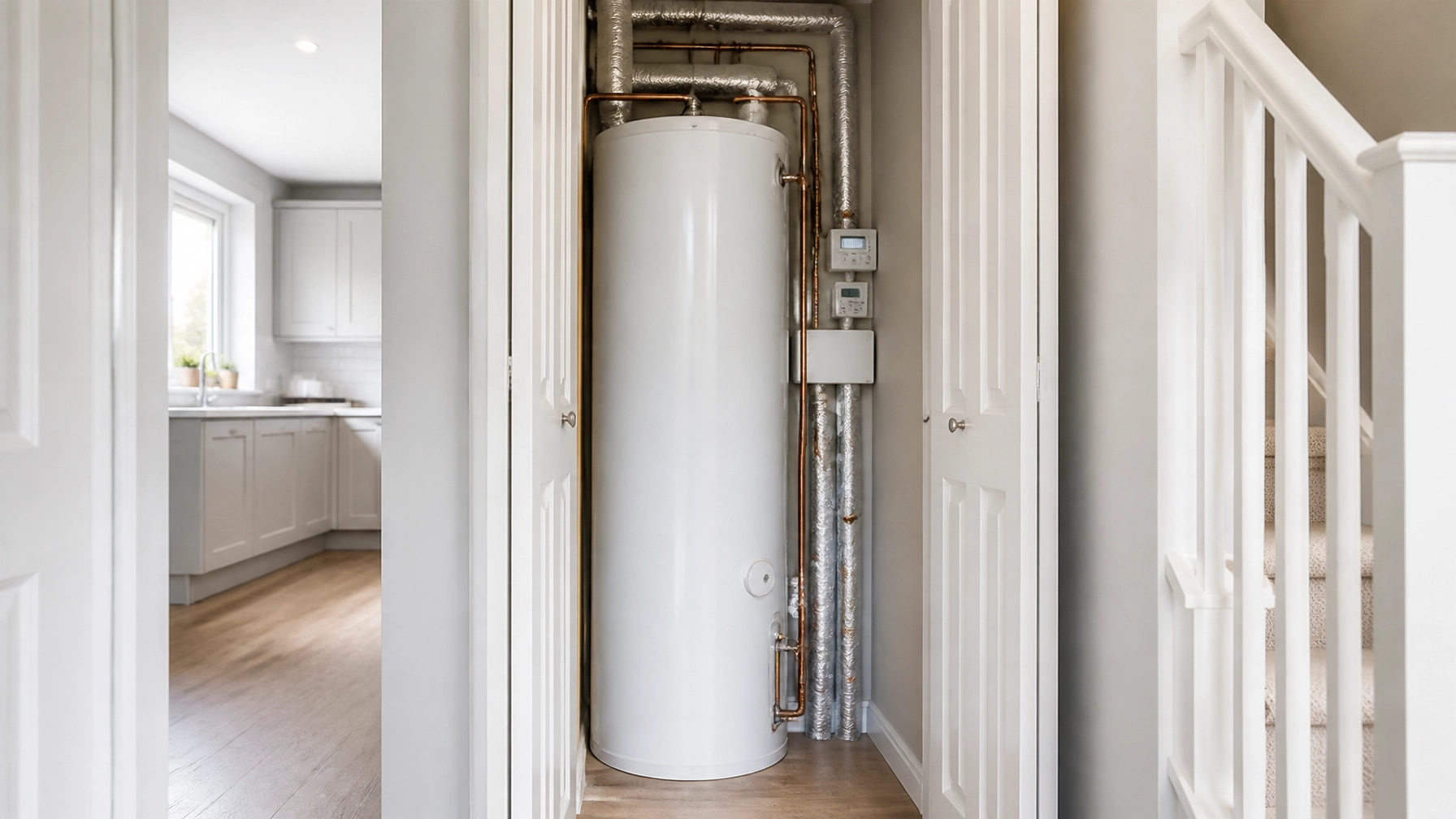
A generic template with the address changed is not enough. Your assessment needs to relate to the property in front of you , including the cylinder in the cupboard, the rarely used ensuite and the outside tap that nobody admits to installing.
What Does a Legionella Assessment for Landlords Include?
A suitable legionella assessment for landlords examines the water system and the people who may be exposed to it.
1. Identify the Water System
Start by establishing how water moves through the property.
Check whether the home has:
- A mains-fed combi boiler
- A hot water cylinder
- A cold water storage tank
- An electric shower
- Pumps or circulation systems
- Shared or communal water supplies
- Multiple bathrooms or little-used outlets
A small flat with a combi boiler and daily water usage will often be low risk. A larger house with stored water, several bathrooms and extended periods of vacancy requires more careful consideration.
2. Check for Stagnation
Legionella risk increases where water remains unused for long periods.
Look for:
- Rarely used showers and taps
- Unused outside taps
- Long pipe runs
- Redundant pipework, sometimes called dead legs
- Guest bedrooms or annexes that are seldom occupied
- Water systems left unused during long void periods
Where practicable, remove redundant pipework. For outlets that remain, introduce a suitable flushing routine.
3. Consider Water Temperatures
Temperature is an important control principle.
As a general guide:
- Stored hot water should be maintained at approximately 60°C or above.
- Hot water should reach outlets at approximately 50°C or above, subject to suitable scalding safeguards.
- Cold water should ideally remain below 20°C.
Do not alter boiler or cylinder settings without considering scalding risks. A temperature that helps control bacteria should not create an avoidable danger for children, older people or vulnerable occupants.
Where the system is complex, use a competent professional to assess how these risks should be balanced.
4. Inspect Showers and Fittings
Showers can create aerosols , tiny droplets that may be inhaled.
Ensure showerheads and hoses are kept clean and free from scale. Include them in routine property maintenance and tenancy changeover procedures.
A shower that has not been used during a long void should be flushed appropriately before the next tenant moves in. This simple step is easy to overlook, which is precisely why it deserves a place on your checklist.

Is Every Rental Property High Risk?
No. Most ordinary domestic properties are considered low risk because water is used regularly and the system has frequent turnover.
A typical low-risk example may include:
- A direct mains cold-water supply
- No cold-water storage tank
- A combi boiler or instantaneous water heater
- Regular daily use of taps and showers
- No unusual pipework or shared water system
Low risk does not mean no responsibility. You still need to consider the system and take reasonable steps to keep it under control.
Risk may increase where the property has:
- Stored hot or cold water
- Complex or communal pipework
- Long periods of vacancy
- Several bathrooms or infrequently used facilities
- Poorly maintained showers
- Vulnerable occupants
- Evidence of unusual temperatures, stagnation or system defects
The depth of assessment should reflect the actual circumstances. A one-bedroom London flat and a large shared property in Kent should not automatically receive the same treatment.
What Does the HSE Expect from Landlords?
The HSE expects landlords to take a practical and proportionate approach.
For most domestic properties, this means you do not need an unnecessarily detailed technical investigation. You should be able to show that you have:
- Considered how the water system operates
- Identified foreseeable risks
- Taken sensible steps to control those risks
- Provided tenants with appropriate information
- Reviewed the assessment when circumstances change
The HSE also confirms that most landlords can assess a simple domestic system themselves if they are competent and understand the relevant risks.
If you are not confident, do not understand the system or manage a more complex property, arrange support from someone suitably competent. The objective is not to collect the most impressive-looking paperwork. It is to manage the water system properly.
When Should You Review the Assessment?
There is no universal legal rule requiring every landlord to commission a new assessment every 12 months or every two years.
You should review the assessment when there is reason to believe it may no longer be valid. Important review triggers include:
- A new boiler, cylinder, tank or significant pipework
- A refurbished bathroom or kitchen
- The addition of a shower, tap or other outlet
- A prolonged period of non-occupation
- A change in the occupancy pattern
- A tenant reporting unusual water temperatures or plumbing problems
- The discovery of redundant pipework
- A change in the vulnerability of occupants
- Evidence that existing control measures are not working
For many landlords, including a review within the tenancy changeover process is sensible. Check the system after a void, flush appropriate outlets and update your records before the new tenancy begins.
Practical Legionella Checklist for Landlords
Use the following checklist for each rental property.
Before a Tenancy Begins
- Identify the boiler, cylinder, tanks and water outlets.
- Check whether any outlets are rarely used.
- Look for redundant pipework and signs of stagnation.
- Confirm that showerheads and hoses are clean.
- Flush the system after a prolonged void.
- Record the date and outcome of your checks.
During the Tenancy
- Tell tenants to report leaks and water-system faults promptly.
- Ask tenants to use taps and showers regularly.
- Explain that showerheads should be cleaned and descaled.
- Advise tenants not to alter cylinder temperature settings.
- Respond quickly to reports of poor hot water performance.
When the Property Changes
- Review the assessment after plumbing or heating works.
- Update records after adding or removing outlets.
- Reassess if the property becomes vacant for an extended period.
- Confirm responsibilities with your letting or managing agent.
If an agent manages the property, check your agreement carefully. It should state who is responsible for arranging the assessment, implementing control measures and retaining records. Do not rely on assumptions. In property management, “I thought the agent had done it” is not a particularly strong compliance strategy.
When Should You Use a Professional Assessor?
Professional support is particularly useful where:
- You manage multiple properties.
- The property has stored water or complex plumbing.
- The building contains communal water systems.
- You manage an HMO or larger shared property.
- The property has been vacant for a significant period.
- You need independent, detailed documentation.
- You are unsure whether your current controls are appropriate.
Evestaff Property Inventory Clerks was founded in 2012 and brings more than 12 years of experience to property documentation and compliance-focused reporting across London and Kent.
Our highly experienced clerks use modern technology, structured processes and meticulous quality checks to create clear, precision-focused records. As accredited members of ECMK, we reinforce our commitment to professional standards and consistent quality.
That Perfectionist approach matters. The small details , a seldom-used shower, a water cylinder setting or an overlooked period of vacancy , can make the difference between a useful assessment and a document that simply occupies space in a folder.
You can also read our related guide to Legionella risk assessment costs for landlords in 2026, which covers pricing in more detail.

Frequently Asked Questions
Is a Legionella risk assessment legally required for landlords?
Landlords have a legal responsibility to assess and control foreseeable Legionella risks. The law does not require every landlord to purchase a formal certificate, but you should keep clear evidence of your assessment and actions.
Can a landlord complete the assessment themselves?
Yes, for a simple, low-risk domestic property, provided the landlord is competent and understands the water system and relevant control measures. More complex properties should receive suitably competent professional attention.
Does every landlord need Legionella water testing?
No. Routine laboratory sampling is not usually required for a typical low-risk domestic water system. Testing may be appropriate if a specific risk assessment identifies a reason for it.
How often should a landlord Legionella assessment be renewed?
There is no fixed statutory renewal period for every domestic rental. Review the assessment when the water system, property, occupancy or circumstances change. A periodic review may also be sensible as part of your wider compliance process.
What is the Legionella landlord legal requirement during a void period?
You should prevent prolonged water stagnation by introducing an appropriate flushing regime or other suitable controls. Before a new tenant moves in, check and flush relevant outlets, particularly showers and rarely used taps.
Keep Your Approach Proportionate, Practical and Documented
The answer to “do landlords need a Legionella risk assessment?” is straightforward: you need to assess and control the risk, but you do not necessarily need a formal certificate or routine laboratory testing.
Start with the actual water system. Identify where water is stored or may stagnate, maintain sensible temperatures, clean shower fittings, manage void periods and keep a dated record of your decisions.
For landlords, property managers and letting agents across London and Kent, Evestaff provides meticulous, technology-supported property documentation backed by more than 12 years of experience. New customers can receive 10% off their first booking directly with us.
If another landlord or property professional could benefit from careful reporting support, you can also make use of our casual Refer a Friend offer.
When you need reliable support with your wider property records, talk to Evestaff Property Inventory Clerks. Good compliance starts with knowing the details : and keeping them in order.
This article provides general information and should not be treated as tailored legal, health and safety or technical advice.
Join The Discussion