
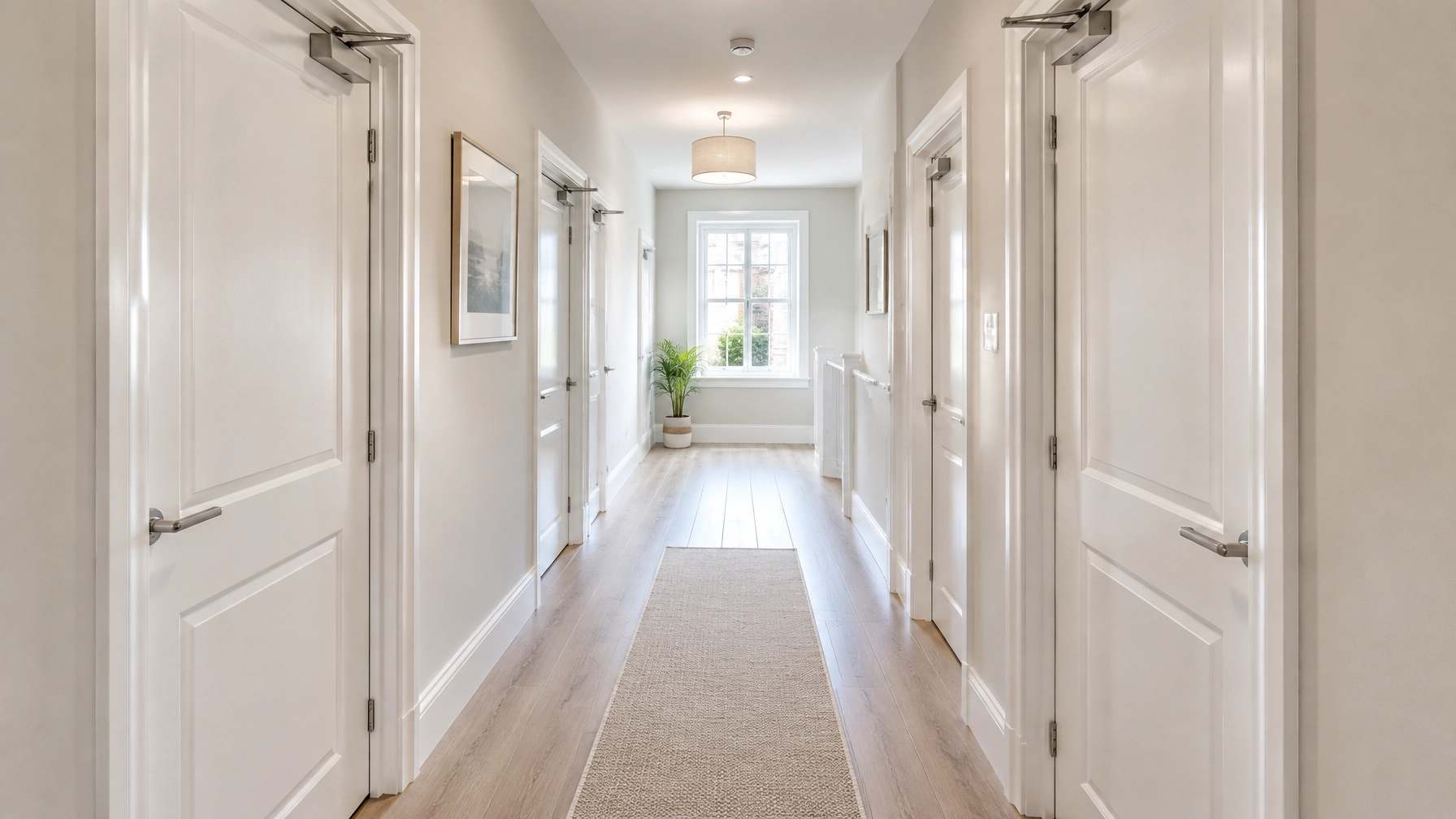
A council visit may happen only once during a five-year HMO licence period, depending on the local authority’s inspection programme. But a blocked hallway, a faulty alarm or a repair complaint can bring attention to your property much sooner. The risks often develop in the gap between scheduled visits.
That is why a landlord’s own HMO inspection matters. A practical interim inspection helps you spot problems early, act on them and keep a clear record of how you manage the property. Think of it as a routine check on the things a council officer may want to see, not a rehearsal designed to make everything look tidy for one afternoon.
Why an interim HMO inspection matters
The Management of Houses in Multiple Occupation (England) Regulations 2006 set out management duties that include maintaining fire safety equipment, keeping escape routes clear, keeping common parts safe, clean and in good repair, and managing refuse. Tenants also have responsibilities: they must not obstruct escape routes or interfere with fire precautions.
Those duties do not pause between council visits. Nor do complaints. A report of poor conditions or disrepair may prompt a council to investigate, so relying on the next licence inspection to identify a problem leaves you reacting when you could have acted earlier.
As a practical baseline, arrange a documented self-inspection at least every six months, and check sooner if a tenant reports disrepair, a safety concern or a change in the property. Your HMO licence, fire-risk assessment or local authority may call for a tighter schedule. Follow the strictest applicable requirement.
Your HMO inspection checklist: five areas to walk through
1. Check escape routes and fire doors
Start at the bedrooms and walk the full route to the final exit. Look for anything that narrows or blocks the way: bags on the landing, bikes in the hallway, rubbish beside the stairs or furniture that has gradually migrated into a shared route.
Check that fire doors close fully and latch properly. Look for damaged or missing smoke seals, loose hinges and faulty self-closers. Doors must not be propped open: a wedge may seem convenient, but it can undermine the door’s purpose when it matters most.
Pay particular attention to gaps. A gap greater than 3 mm is a fail against the fire-door check specified here. Record the location and arrange an appropriate repair; do not improvise changes that could compromise the door’s performance. Check the relevant licence conditions and fire-safety advice for your building.

2. Check alarms and keep the fire logbook current
Test the alarm system in line with its grade and your property’s requirements. For a Grade A system, test one device per zone each week and arrange professional servicing every six months. For Grade D, use the test button monthly; for higher-risk properties, test fortnightly. Arrange annual maintenance, including cleaning and battery checks.
During an interim visit, look for obvious signs of trouble, such as a fault indicator, damage or a device that appears to have been covered or interfered with. A routine visual check does not replace the specified test or professional servicing.
Keep a fire logbook with test dates, faults, call-outs, maintenance visits and certificates. A test that happened but was never recorded is difficult to evidence later. A short, consistently maintained log is far more useful than a scramble through old emails when a council officer asks what has been done.
3. Review common parts, amenities and refuse
Walk through shared kitchens, bathrooms, living areas, hallways and stairways. Check that common parts are reasonably clean, in good repair and safe to use. Look for leaks, damaged flooring, loose handrails, broken fittings, poor lighting and signs of damp or mould.
Check that shared amenities remain usable and that refuse is being managed appropriately. Overflowing bins, food waste left in communal areas and blocked access to facilities can quickly turn a manageable housekeeping issue into a condition complaint.
In the kitchen, note damaged appliances, unsafe-looking sockets, broken cupboard doors and anything affecting safe use. Record defects and arrange a repair rather than assuming that someone else will flag them. A clean, functioning communal space is part of good HMO management, not just a nice extra.

4. Look at bedrooms and occupancy
Check for signs that the property is being used differently from the arrangement on the licence. Additional sleeping spaces, extra beds or rooms being used by more people than permitted deserve prompt attention. So do alterations that may affect the layout, access or fire precautions.
Furniture can also create “room-size creep”: the room has not physically shrunk, but a new bed, desk and wardrobe may leave little usable space or make the route to the door awkward. Note changes and compare the current arrangement with the approved occupancy and relevant licence conditions.
For licensed HMOs in England, national minimum sleeping-room sizes include 6.51 m² for one person aged over 10 and 10.22 m² for two people aged over 10. Local standards and licence conditions may set additional requirements. Do not treat a casual tape-measure check as a substitute for confirming the applicable standard.
5. Check certificates and records
Use the visit to confirm that your compliance file is current and easy to retrieve. Gas safety checks are required annually. Fixed electrical installations must be inspected and tested at least every five years. Keep the certificates alongside your fire-safety records, repair history and inspection notes.
A useful log records the date, who inspected, which areas were checked, what was found and what action followed. If a defect remains open, write down who is responsible and when it is due to be resolved. This turns a list of observations into a management record.
What to do when your HMO inspection finds a problem
Use a simple process: photograph, log, fix and verify. Take clear photographs where appropriate, record the room or location, describe the issue in plain language and arrange the right repair. Once work is complete, update the record and keep any relevant invoice, certificate or contractor note.
If a tenant has reported the problem, acknowledge the report and keep a record of your response and access arrangements. For non-emergency visits, give the appropriate notice and respect the tenancy agreement and the tenant’s right to quiet enjoyment. If there is an immediate danger, respond urgently and follow the relevant emergency procedures.
A written property inspection report gives you a dated account of the property’s condition and the action taken. It can help you explain your management process at licence renewal or after a complaint. It cannot guarantee that a council will take no further action, but it gives you a much clearer evidence trail than memory alone.
Breaches of HMO management requirements can lead to civil penalties. As at October 2026, the maximum penalty for specified offences is £40,000 for offences on or after 1 May 2026. That is a maximum, not an automatic penalty for a missed visit or a single defect; the outcome depends on the offence and circumstances. The practical lesson is simpler: identify issues, address them promptly and keep evidence of what you have done.
Make the routine work for your property
Keep your checklist consistent, but adapt it to the building, occupancy, fire-risk assessment and licence conditions. A large shared house with repeated reports of obstruction may need closer attention than a well-managed property with a strong compliance record. If you manage several HMOs, use the same reporting structure across them so that outstanding actions do not disappear between properties.
An experienced independent clerk can bring a fresh pair of eyes to the visit and produce a structured record. Evestaff Property Inventory Clerks has served landlords and property professionals in London and Kent since 2012, combining highly experienced clerks with modern technology and meticulous, precision-focused documentation. Evestaff is also an accredited member of ECMK.
If you would like to see how clear documentation supports property management, explore our guide to property inventory reports. You can also see the full range of our residential property services, including the areas we cover across London and Kent. New customers can receive a 10% discount on their first booking, and you can find the Refer a Friend offer here.
A council inspection is one checkpoint. Your own regular, well-recorded HMO inspection is how you keep the property on track in between.
Join The Discussion