

Awaab's Law has fundamentally changed what counts as acceptable landlord behaviour when damp and mould appear in your properties. Gone are the days when you could simply promise to "look into it" and hope the problem goes away. Now, you need documented proof that you've investigated, responded, and acted within strict statutory timeframes.
Your property reports aren't just paperwork anymore: they're your legal defence.
Why Audit Trails Are Your Best Protection
When a tenant raises concerns about damp or mould, the clock starts ticking immediately. Awaab's Law sets firm deadlines for investigation and remediation, and if you're challenged later, your audit trail becomes the only evidence that matters. Without comprehensive documentation, "we did everything we could" means precisely nothing in front of a tribunal.
Professional property reports create a searchable, defensible case file that demonstrates you made reasonable endeavours to comply with your statutory obligations. Think of it as building your compliance story as events unfold, rather than scrambling to reconstruct what happened months later when memories have faded and contractors have lost their records.
What Must Be Documented From Day One
Awaab's Law requires meticulous record-keeping that goes well beyond a few photos and a contractor's quote. Your documentation must cover the entire compliance journey, from initial report through investigation, communication, and final remediation.
Start with the basics: date and time of the initial tenant report, method of communication, and a verbatim record of what was reported. Include any photos the tenant provided and their description of how long the issue has existed. This establishes your starting point and begins your timeline.
Then document every single step you take. Record when you appointed an investigator, their qualifications, and what you instructed them to do. Capture all site visit details, including who attended, when they visited, what areas they examined, and what equipment they used. Take comprehensive photographs that show the extent and location of any damp or mould, plus contextual shots that reveal potential causes like blocked ventilation or damaged guttering.
Your investigation records must include technical analysis: not just "there's mould on the wall" but "condensation-induced mould growth caused by inadequate ventilation and thermal bridging at the window reveal." Document the root causes, not just the symptoms. This level of detail proves you've conducted a proper investigation rather than a superficial look-around.
Timeline Compliance: The Three-Day and Five-Day Rules
Awaab's Law imposes two critical timeframes that your property reports must prove you've met.
First, you must provide a written summary of your investigation findings within three working days of completing the investigation. This isn't three days to finish the work: it's three days to tell the tenant what you found and what you're going to do about it. Your property reports need to show the exact date you completed the investigation and the exact date you sent the written summary, with proof of delivery.
Second, if the hazard is classified as emergency or significant, you must begin physical remediation work within five working days. Note that it's five working days from when you should have known about the hazard, not from when you eventually decided to do something. Your documentation must establish when you became aware of the issue and when contractors actually started work on site.
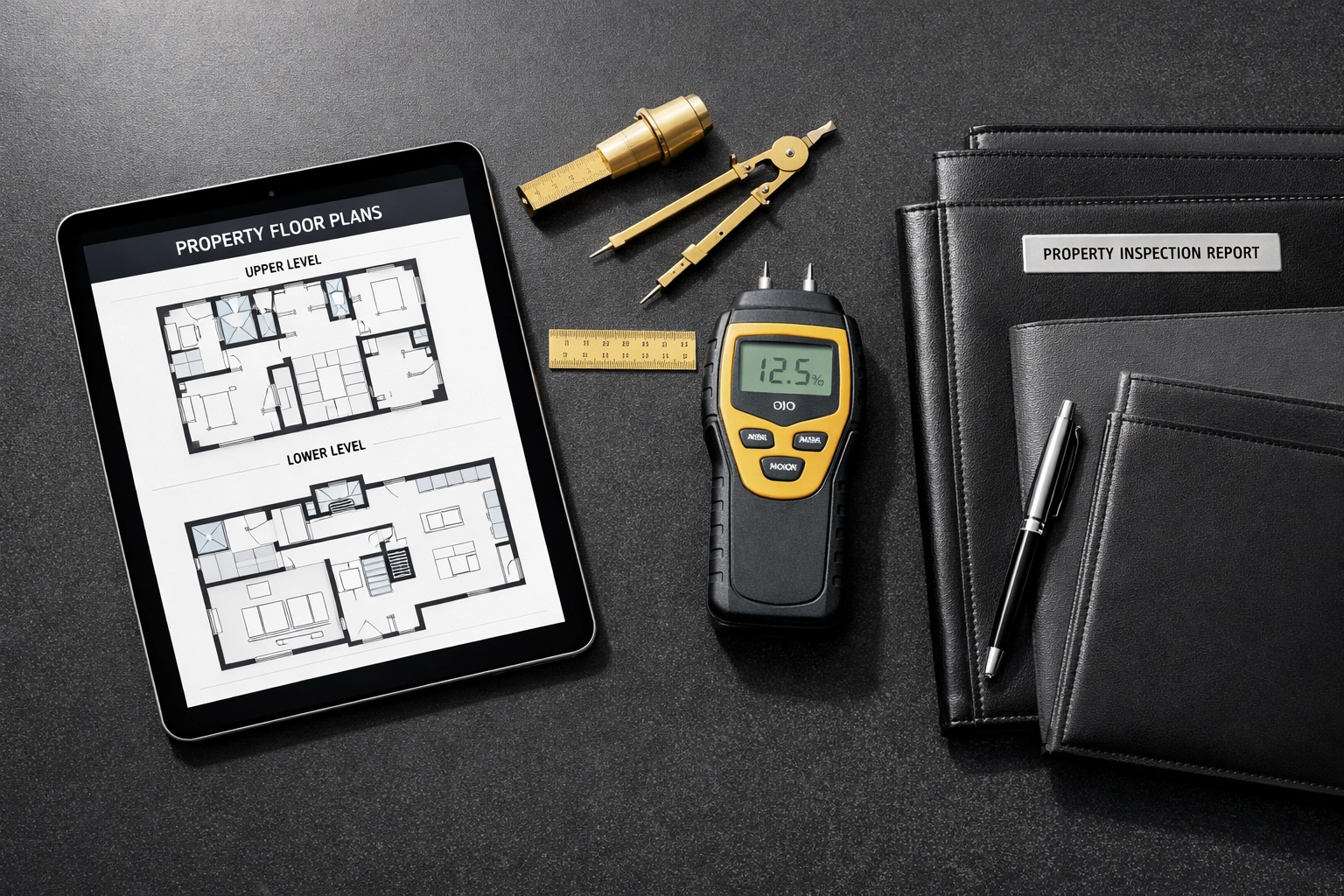
These timeframes are strict. "We tried to book someone but they were busy" doesn't cut it. Your property reports should include contractor appointment confirmations, work schedules, and photographic evidence that work commenced when you claim it did. If you miss the deadline, document why and what alternative arrangements you made.
Investigation Documentation That Stands Up to Scrutiny
Your investigation records need to demonstrate competent professional assessment, not a quick glance from someone who once watched a damp course advert on television.
Document the investigator's qualifications and experience. Include their official appointment letter or contract. Record their methodology: did they use moisture meters, thermal imaging, air quality testing? What standards or guidance did they follow? This proves you engaged a competent person to conduct a proper investigation.
Site visit reports should be detailed enough that someone who's never visited the property could understand the situation. Include floor plans showing affected areas, measurements of moisture readings at multiple points, temperature differentials, and photographs from multiple angles. Capture relevant context like nearby water sources, ventilation provision, heating systems, and occupant lifestyle factors that might contribute to condensation.
Risk assessments form a crucial part of your documentation. Awaab's Law requires you to consider occupant circumstances when determining hazard severity. A small patch of mould might be classified differently if the property houses a family with young children or someone with respiratory conditions. Your property reports must show you assessed risk in the context of who's actually living there, not some theoretical average tenant.
Communication Records: Prove You Kept Them Informed
Every interaction with your tenant about damp and mould must be documented. Every. Single. One.
Keep copies of all correspondence: emails, letters, text messages, phone call notes, and portal messages. If you had a conversation at the property, write a file note immediately afterwards summarising what was discussed. Record what information you provided, what the tenant said in response, and what actions you agreed.
The three-day written summary is particularly critical. Your property reports should include a copy of exactly what you sent to the tenant, when you sent it, and proof it was received. If you posted it, get proof of postage. If you emailed it, save the sent confirmation. If you hand-delivered it, get a signature. This single document often becomes the focal point of compliance disputes, so treat it with appropriate gravity.
Document progress updates throughout the remediation process. When contractors attend, tell the tenant. When work is delayed, explain why. When additional issues are discovered, communicate them promptly. Your property reports should demonstrate continuous, proactive communication rather than radio silence until the problem is fixed.
Recording Tenant Vulnerabilities Appropriately
Awaab's Law explicitly requires you to consider tenant health vulnerabilities when classifying hazards and determining response urgency. However, you can only record health information that tenants have voluntarily disclosed and agreed you may document.
When a tenant mentions health conditions: asthma, respiratory issues, immune system problems, young children, pregnancy: record this carefully in your property reports. Note the date disclosed, the context of disclosure, and what the tenant said about how the damp or mould might affect them. This information directly influences whether a hazard is classified as emergency, significant, or other.
Be sensitive but thorough. Your documentation serves dual purposes: it shows you properly considered vulnerability in your risk assessment, and it provides context if questions arise later about why you classified a particular situation as significant rather than minor.
Don't make assumptions about vulnerability based on age, appearance, or lifestyle. Record only what you've been explicitly told and what's relevant to hazard classification. Your property reports should reflect person-centred decision-making based on actual circumstances, not stereotypes.
How Professional Reports Consolidate Your Compliance Evidence
This is where professional property inventory clerks demonstrate their value. Awaab's Law compliance isn't a single document: it's a comprehensive case file that consolidates multiple evidence streams into a searchable, defensible audit trail.
Professional property reports bring together repair history, investigation findings, risk assessments, communication logs, contractor records, photographic evidence, and progress documentation into one coherent narrative. When everything's properly indexed and cross-referenced, you can instantly produce evidence that you met your statutory obligations.
At Evestaff, our clerks have documented thousands of properties across London and Kent since 2012. We understand exactly what evidence satisfies compliance requirements because we've seen what works: and what fails: in actual disputes. Our reports don't just describe what's there; they create the audit trail that protects you if your actions are challenged.
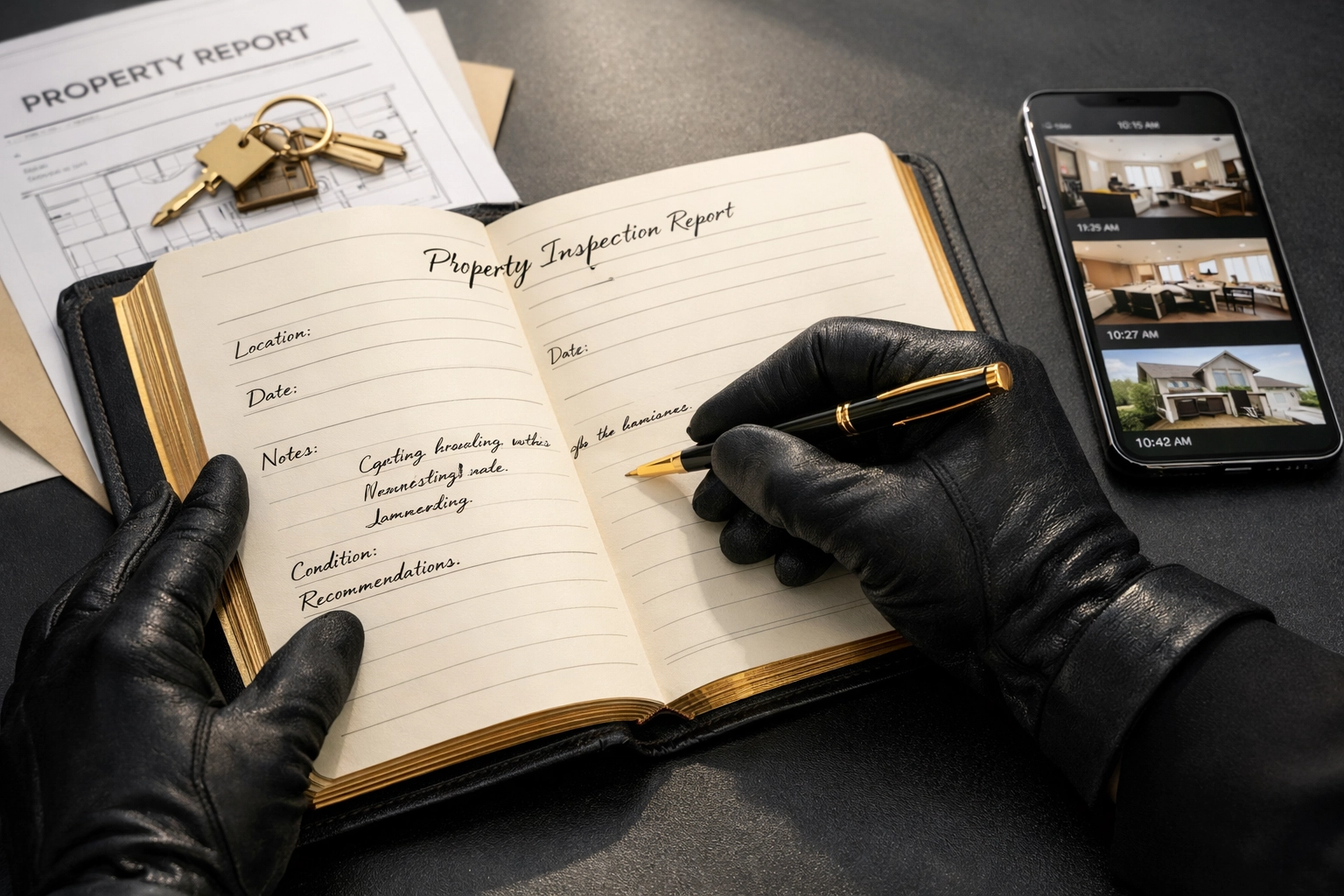
Modern technology enhances this process considerably. Cloud-based report systems allow real-time updates as situations develop. Time-stamped photographs prove exactly when investigations occurred. Digital communication logs show precisely when you informed tenants of findings. Automated reminders ensure you don't miss critical deadlines. This technology-enabled approach transforms compliance from a paper-chasing nightmare into a systematic, defensible process.
Creating Your Searchable Case File
Structure your property reports so they function as working case files, not just archived records. Use consistent formatting, clear indexing, and chronological organisation. When a health inspector or tribunal asks "can you show me when you first became aware of the mould?", you should be able to pull that information in seconds, not spend three days hunting through filing cabinets.
Include a case summary at the front of each file that provides key dates, classifications, and outcomes at a glance. Maintain a detailed chronology that lists every event, action, and communication with precise dates and times. Attach all supporting evidence: photos, test results, contractor reports, correspondence: to the relevant chronology entries so anyone can follow your compliance story from start to finish.
Digital files should be backed up securely and accessible to anyone who needs them. Cloud storage with proper access controls ensures your compliance evidence survives even if your office floods or your laptop gets stolen. Build redundancy into your record-keeping systems because audit trails are only useful if they're actually there when you need them.
Your Documentation Strategy Starts Now
Awaab's Law compliance isn't something you can retrofit. You can't create a convincing audit trail six months after events occurred when you're facing a tribunal. The documentation must happen in real-time, as events unfold, with proper attention to detail and accuracy.
Review your current property reporting processes. Can you demonstrate investigation within appropriate timeframes? Do you have proof you provided written summaries within three days? Can you show when remediation work actually began? If any of these questions make you uncomfortable, your documentation needs immediate improvement.

Professional property reports provide the foundation for Awaab's Law compliance. They create the audit trail that demonstrates reasonable endeavours, proves timeline adherence, and documents person-centred risk assessment. When damp and mould issues arise: and they will: your reports become your primary legal defence.
The GOV.UK guidance states it plainly: landlords "must keep clear records of all attempts to comply with Awaab's Law requirements, including records of all correspondence with tenants and any contractors." Your property reports aren't optional administrative extras. They're mandatory compliance evidence that determines whether you've met your statutory obligations or face enforcement action.
Get your documentation right from the start. Your audit trail begins with proper property reports, maintained systematically, updated consistently, and structured to prove compliance when it matters most. That's not bureaucracy( it's protection.)
Join The Discussion