

The safety net is coming down. After 1 May 2026, Section 21 evictions: the landlord's nuclear option for ending tenancies without providing a reason: will be completely abolished under the Renters' Rights Bill. For decades, this legislative backstop gave landlords a straightforward exit strategy. Now? That certainty vanishes, and with it, your margin for error.
Here's what most landlords haven't grasped yet: when Section 21 disappears, your property inventory transforms from administrative box-ticking into your primary line of defence. It's no longer just about documenting condition: it's about creating evidence that stands up in tribunals, protects your deposit claims, and justifies any future Section 8 eviction grounds you might need.
Let's break down exactly what's changing and why your inventory process needs to get significantly more robust before May arrives.
What Section 21 Actually Gave You (And Why You'll Miss It)
Section 21 was simple. After the fixed term ended, you served two months' notice, and provided you'd protected the deposit correctly and given the tenant the required documents, that was it. No reasons needed. No tribunal arguments. The tenancy ended.
This created breathing room. If a tenant was difficult but not quite bad enough to justify a Section 8 eviction, you waited for the fixed term to finish and moved on. If you wanted to sell or move back in, Section 21 provided a clean exit. It wasn't perfect, but it was predictable.
That predictability dies in May 2026.
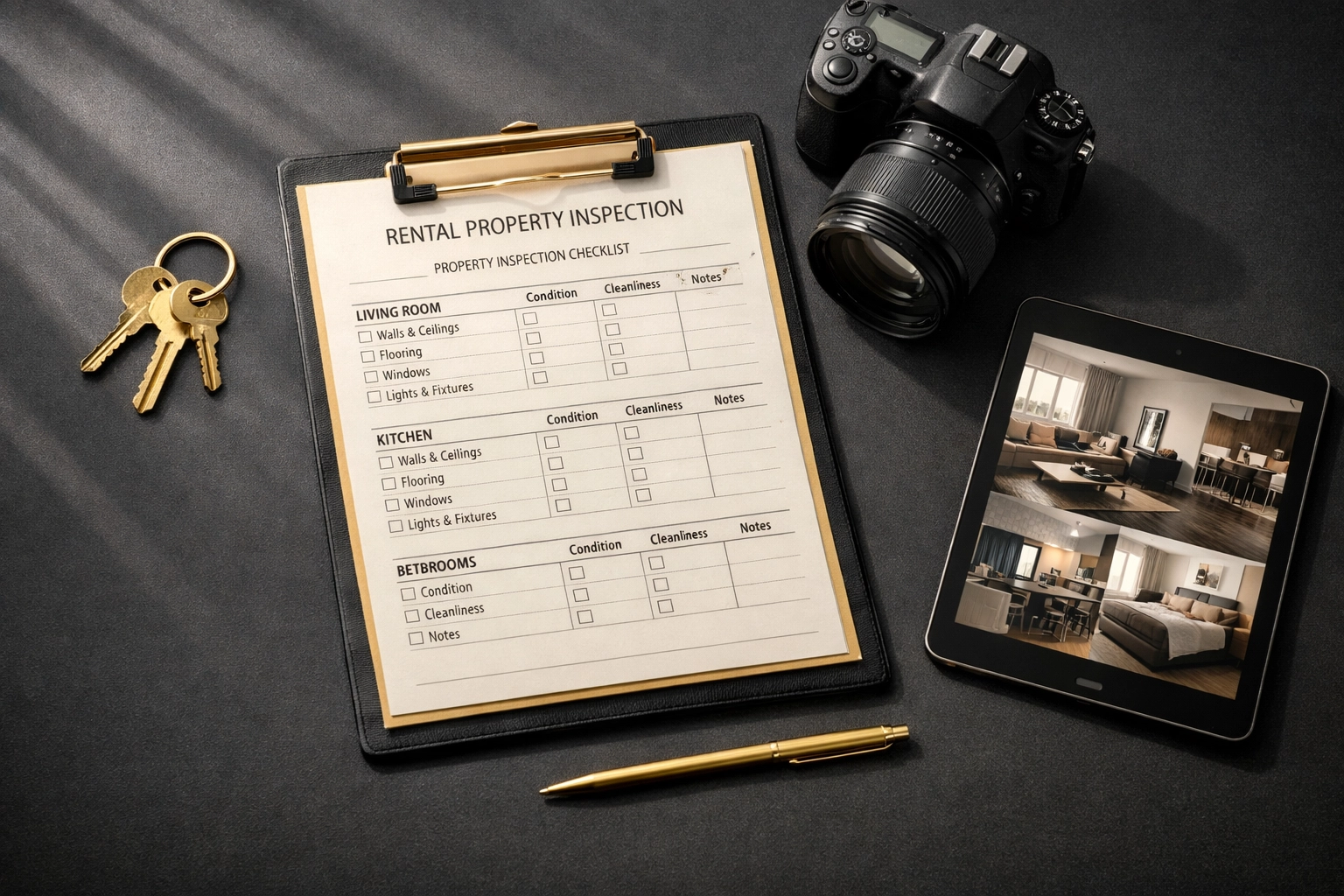
The New Reality: Periodic Tenancies and Section 8 Only
Under the Renters' Rights Bill, all assured shorthold tenancies become open-ended periodic agreements. No more fixed terms. No more natural endpoints. Tenancies simply continue until one party ends them: and for landlords, ending them now requires specific, legally defensible grounds.
You'll only be able to evict using Section 8 grounds, which require proof:
Mandatory grounds (where the court must grant possession if proven):
- Serious rent arrears (at least two months' arrears at both notice and hearing)
- Repeated rent arrears (even if later paid)
- Certain criminal convictions
- Breach of immigration rules
Discretionary grounds (where the court decides based on reasonableness):
- Rent arrears (less severe)
- Breach of tenancy agreement
- Property damage or neglect
- Persistent nuisance or anti-social behaviour
- Deterioration of furniture due to ill-treatment
Notice the pattern? Nearly every practical ground requires evidence. Documented evidence. Evidence that predates the dispute. Evidence that comes from your property inventory.
The Bill also introduces enhanced protections: tenants get a 12-month protected period at the start where you can't evict them to move in yourself or sell the property. After that, you must give four months' notice for these grounds. The balance of power has shifted substantially.
Why Your Inventory Just Became Non-Negotiable
Previously, a mediocre inventory might cost you some deposit deductions. Frustrating, but manageable. Now, a weak inventory could trap you in an unworkable tenancy for months or even years.
Consider this scenario: your tenant stops maintaining the garden, allows black mould to develop through poor ventilation, and damages kitchen units. You want them to leave. Under the old system, you'd wait for the fixed term to end and serve Section 21. Under the new system, you need to prove breach of tenancy agreement or property damage: and that means comparing current condition to documented move-in condition.
If your check-in inventory reads "Kitchen: good condition; Garden: maintained," you've got nothing. If it specifies "Kitchen units: white gloss finish, no chips or scratches observed; handles secure; worktops: black granite effect, no staining or heat damage; Garden: lawn mown, borders weeded, fence panels intact and treated" with corresponding timestamped photographs, you've got leverage.

What a Professional Inventory Must Contain in 2026
The bar for acceptable inventory quality is rising sharply. You need documentation that would hold up in a property tribunal, created by someone who understands both property and evidence standards.
Detailed written descriptions: Room-by-room, item-by-item specificity. Document finishes, conditions, defects, colours, materials, and functionality. "Bedroom carpet: beige" doesn't cut it. "Bedroom carpet: beige berber twist, professionally cleaned, minor wear to threshold area, no stains or damage" does.
Comprehensive photography: High-resolution, timestamped images covering every room from multiple angles. Close-ups of existing damage, wear patterns, and distinctive features. Wide shots showing overall condition and layout. Dated and geotagged where possible.
Meter readings and utilities: Gas, electric, and water meter readings with photographs. Boiler service records. Alarm codes. Utility account details. This prevents disputes over consumption and establishes baselines.
Testing and functionality: Evidence that all appliances, heating, smoke alarms, and systems were working at move-in. If something breaks during the tenancy, you need proof it was functional when they arrived.
Cleanliness standards: Specific cleanliness descriptions that set expectations. "Property professionally cleaned throughout" with supporting photos prevents arguments about what standard tenants should return the property to.
External areas: Gardens, parking spaces, bin stores, communal areas. Often overlooked, frequently disputed.
Your inventory clerk needs to think like a tribunal adjudicator, because that's exactly who might be reading this document in twelve months' time.

The Cost of Getting It Wrong
Let's be direct about what poor inventory practice could cost you post-May 2026:
Deposit disputes: Without clear evidence of move-in condition, tenancy deposit schemes will rule in the tenant's favour. You'll be funding repairs from your own pocket while the tenant walks away with their full deposit.
Prolonged tenancies: If you can't prove grounds for Section 8 eviction, you're stuck. A tenant paying rent irregularly but never quite hitting the mandatory arrears threshold could stay indefinitely. A tenant causing problems that you can't adequately document could remain for months while you gather evidence.
Tribunal costs: Defending your position at a property tribunal requires legal representation, time, and documented evidence. Weak inventories mean weaker cases and higher costs.
Property deterioration: The longer a problematic tenancy continues, the more damage accumulates: and without that baseline inventory, you can't prove any of it was tenant-caused.
The maths is stark: a professional inventory from Evestaff costs a few hundred pounds. A failed tribunal case or lost deposit claim costs thousands. A tenant you can't remove costs tens of thousands in lost rent, legal fees, and repair bills.
The Evestaff Difference: Precision Documentation for the New Era
We've been preparing for this shift since the Renters' Rights Bill was announced. Our inventory methodology was already designed around tribunal-quality evidence: because that's the standard that actually protects landlords.
Every Evestaff inventory clerk is trained in documentation standards that anticipate disputes. We create inventories as if they're going to be read by an adjudicator, because increasingly, they will be. Our reports include technical terminology, specific measurements, and photographic evidence that establishes indisputable baselines.
We're based in London and Kent, but our approach reflects industry best practice nationwide. Our clerks carry professional equipment, use standardised reporting templates, and understand both property management and evidence requirements. We've been doing this since 2012, and we've watched thousands of deposit disputes hinge on inventory quality.
The question isn't whether you can afford professional inventory services. It's whether you can afford not to have them.

What You Need to Do Before May 2026
If you're a landlord or letting agent with tenancies turning periodic in the next few months, act now:
Audit your existing inventories: Pull your recent check-in reports and assess them honestly. Would they stand up in a tribunal? Could you prove property damage or neglect from these descriptions and photos? If not, you're exposed.
Upgrade your inventory provider: If you're currently using basic templated inventories or in-house staff without specialist training, switch to professional inventory clerks before your next tenancy begins. The cost difference is negligible compared to the protection gap.
Implement mid-term inspections: Regular documented inspections (quarterly or bi-annually) create an evidence trail showing how property condition evolves during the tenancy. If you need to prove neglect or damage, dated inspection reports are invaluable.
Review your tenancy agreements: Ensure your agreements clearly specify tenant obligations around property maintenance, cleanliness, and reporting of damage. Your inventory should reference these clauses.
Train your team: If you manage properties in-house, ensure everyone understands the new eviction framework and why inventory quality matters more than ever.
The window for preparation is closing. May 2026 arrives in three months, and every tenancy that begins or renews after that date operates under the new rules.
Section 21 Is Dead: Long Live the Inventory
The removal of Section 21 isn't inherently catastrophic for landlords, but it does fundamentally change the evidence requirements for property management. Where you previously had a legislative safety valve, you now have a dispute resolution framework: and that framework runs on documentation.
Your property inventory, created by experienced professionals who understand both property and evidence standards, becomes your primary protection mechanism. It's what proves the tenant caused that damage. It's what justifies your deposit deductions. It's what makes the difference between a successful Section 8 eviction and months of legal limbo.
We've built our entire service model around this level of precision, because we've always known that eventually, every inventory would need to meet tribunal standards. That future is here.
Get your inventories right, or get ready to pay for them later. The choice has never been clearer.
Need tribunal-quality inventories before the Section 21 deadline? Speak to our team about upgrading your inventory process before May 2026.
Join The Discussion