

The property landscape is shifting beneath your feet. With the Renters' Rights Act taking effect throughout 2026, property inventory services are no longer just "nice to have": they're becoming essential legal documentation. Yet across London and Kent, we're witnessing the same costly mistakes repeated time and again by landlords, property managers, and letting agencies.
At Evestaff Property Inventory Clerks, we've conducted over 15,000 property inventories since 2012. Through this experience, we've identified seven critical errors that could expose you to significant financial risk when the new regulations take full effect. More importantly, we've developed proven solutions to address each one.
Mistake 1: Relying on Basic Checklists Instead of Comprehensive Documentation
The biggest mistake we encounter is treating property inventories like simple tick-box exercises. Basic checklists might have sufficed in 2015, but today's legal requirements demand forensic-level detail.
The Problem: Generic templates miss crucial details that could determine the outcome of a deposit dispute. Under the strengthened tenant protections coming in 2026, you'll need to prove the exact condition of every element in your property. A simple "bedroom – good condition" entry won't hold up in tribunal.
The Fix: Implement systematic room-by-room documentation that captures specific details about surfaces, fixtures, and fittings. Each item should include condition descriptions using standardised terminology, measurements where relevant, and photographic evidence. Professional inventory clerks understand which details matter most in legal proceedings.
Your inventory reports should read like a property's biography, not a shopping list.

Mistake 2: Poor Quality Photography and Visual Evidence
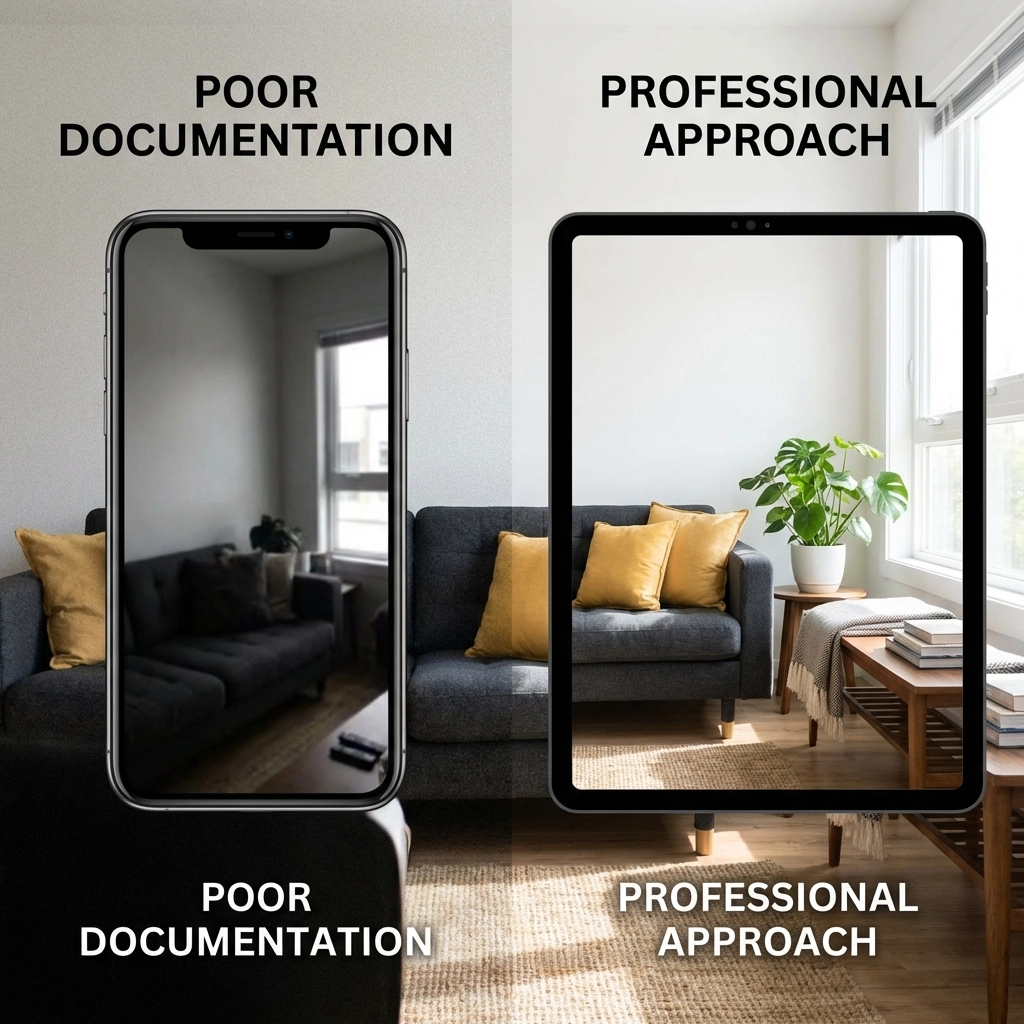
We regularly review inventory reports where photographs are blurry, poorly lit, or fail to show relevant details. This isn't just unprofessional: it's legally problematic.
The Problem: Smartphone snapshots taken in poor lighting conditions don't constitute reliable evidence. Courts and tribunals increasingly expect high-quality visual documentation that clearly shows property conditions. Grainy photos of carpet stains or poorly framed images of wall damage won't support your case.
The Fix: Use professional-grade photography techniques with proper lighting and composition. Each photograph should tell a clear story about the item's condition. Wide shots establish context, while close-ups capture specific details. Time stamps and metadata provide additional authentication.
Professional inventory services invest in quality equipment and training to ensure every image meets evidential standards. The few extra pounds spent on professional photography could save you hundreds in disputed deposits.
Mistake 3: Inconsistent Documentation Standards
Perhaps the most costly mistake involves inconsistent approaches to documentation across your property portfolio. Different clerks, different standards, different outcomes.
The Problem: When your inventory reports vary significantly in detail and format between properties, you create vulnerability. Tenants' solicitors will exploit inconsistencies to challenge your documentation standards across your entire portfolio.
The Fix: Establish standardised procedures and terminology across all properties. Every clerk should follow identical protocols for measuring, describing, and photographing property elements. Create a comprehensive style guide that ensures consistency regardless of who conducts the inventory.
Modern property management increasingly relies on robust IT infrastructure to maintain these standards. This is where complementary services like ITandconsultancy.co.uk become valuable: ensuring your digital documentation systems are secure and efficiently organised.
Mistake 4: Failing to Capture Subtle but Significant Details
Many inventory reports miss subtle details that become significant issues later. Minor wall marks, slight carpet wear, or small scratches might seem insignificant, but they often become major disputes.
The Problem: Tenants frequently claim that documented damage was pre-existing but not recorded. Without comprehensive initial documentation, you'll struggle to prove otherwise. The 2026 changes place greater emphasis on fair treatment, making thorough initial documentation even more critical.
The Fix: Adopt a "forensic mindset" during inventory inspections. Document everything, no matter how minor it appears. Use standardised damage classification systems and ensure every mark, stain, or defect is photographed and described precisely.
Remember: it's easier to remove items from a comprehensive inventory than to add missing details after a dispute begins.
Mistake 5: Inadequate Tenant Communication and Involvement
Many inventory processes exclude tenants entirely, creating fertile ground for disputes. This approach becomes particularly problematic under the enhanced tenant rights framework taking effect in 2026.
The Problem: When tenants don't participate in the inventory process, they can later claim unfair treatment or argue that conditions were misrepresented. The new regulations emphasise tenant involvement in all aspects of the rental process.
The Fix: Implement collaborative inventory procedures where tenants are present and engaged throughout the process. Provide copies of all documentation immediately, and ensure tenants understand their rights to raise concerns about recorded conditions.
Professional inventory services know how to manage these interactions diplomatically while maintaining thorough documentation standards.
Mistake 6: Ignoring Digital Transformation Requirements
The property sector is rapidly digitalising, yet many inventory processes remain stuck in the past. Paper-based systems and manual processes create inefficiencies and vulnerabilities.
The Problem: Physical documents can be lost, damaged, or disputed. Manual processes introduce human error and inconsistency. As regulations become more stringent, you need systems that provide reliable digital trails and instant access to historical data.
The Fix: Transition to digital-first inventory systems that create secure, timestamped records with automatic backup protocols. Ensure your chosen system integrates with your broader property management technology stack.
Digital transformation isn't just about efficiency: it's about creating legally robust documentation systems that satisfy evolving regulatory requirements.

Mistake 7: Not Preparing for 2026 Regulatory Changes
The most serious mistake is assuming your current inventory processes will suffice under the new regulatory framework. The Renters' Rights Act represents the most significant change to private rental regulation in decades.
The Problem: Many of the practices that were acceptable under previous regulations won't meet the enhanced tenant protection standards coming into effect. Waiting until 2026 to address these changes puts your entire portfolio at risk.
The Fix: Begin implementing enhanced inventory procedures immediately. Focus on comprehensive documentation, tenant involvement, and digital systems that provide robust audit trails. Consider partnering with professional inventory services that understand the regulatory landscape.
Evestaff Property Inventory Clerks has been preparing for these changes since early 2025, ensuring our procedures exceed the new requirements before they become mandatory.
The Cost of Getting It Wrong
These mistakes aren't just operational inconveniences: they're financial risks that increase exponentially under the new regulatory framework. Disputed deposits, tribunal costs, and reputational damage can quickly escalate into significant business threats.
Consider the mathematics: a disputed £2,000 deposit might cost £500 in tribunal fees, £800 in legal representation, and countless hours of your time. Multiple disputes could seriously impact your cash flow and business reputation.
Professional inventory services typically cost between £150-£300 per property: a fraction of the potential cost of a single disputed deposit.
Your Next Steps
Review your current inventory processes against these seven common mistakes. If you identify gaps, address them immediately rather than waiting for the 2026 changes to take full effect.
Consider whether your current approach provides the level of detail, consistency, and legal robustness required under the new regulatory framework. Remember: the goal isn't just compliance: it's creating systems that protect your business interests while treating tenants fairly.
Professional inventory services offer expertise, consistency, and legal knowledge that's difficult to replicate in-house. As the regulatory environment becomes more complex, this expertise becomes increasingly valuable.
The property market rewards those who prepare for change rather than react to it. Start implementing these improvements today, and you'll be well-positioned for whatever 2026 brings.
For professional inventory services across London and Kent, visit our website or contact our team to discuss your specific requirements.
Join The Discussion