

Property management in 2026 isn't what it was a decade ago. With the Renters' Rights Bill reshaping the landscape and deposit protection schemes becoming increasingly stringent, the margin for error has shrunk to nothing. If you're still treating check-out reports as an optional extra or a box-ticking exercise, you're playing Russian roulette with your clients' investments: and your professional reputation.
The check-out report is the final piece of the tenancy documentation puzzle. It's your evidence, your protection, and your proof. Without it, you're essentially asking adjudicators to take your word over a tenant's when disputes arise. Spoiler alert: they won't.
The Legal Foundation: Why Documentation Trumps Memory
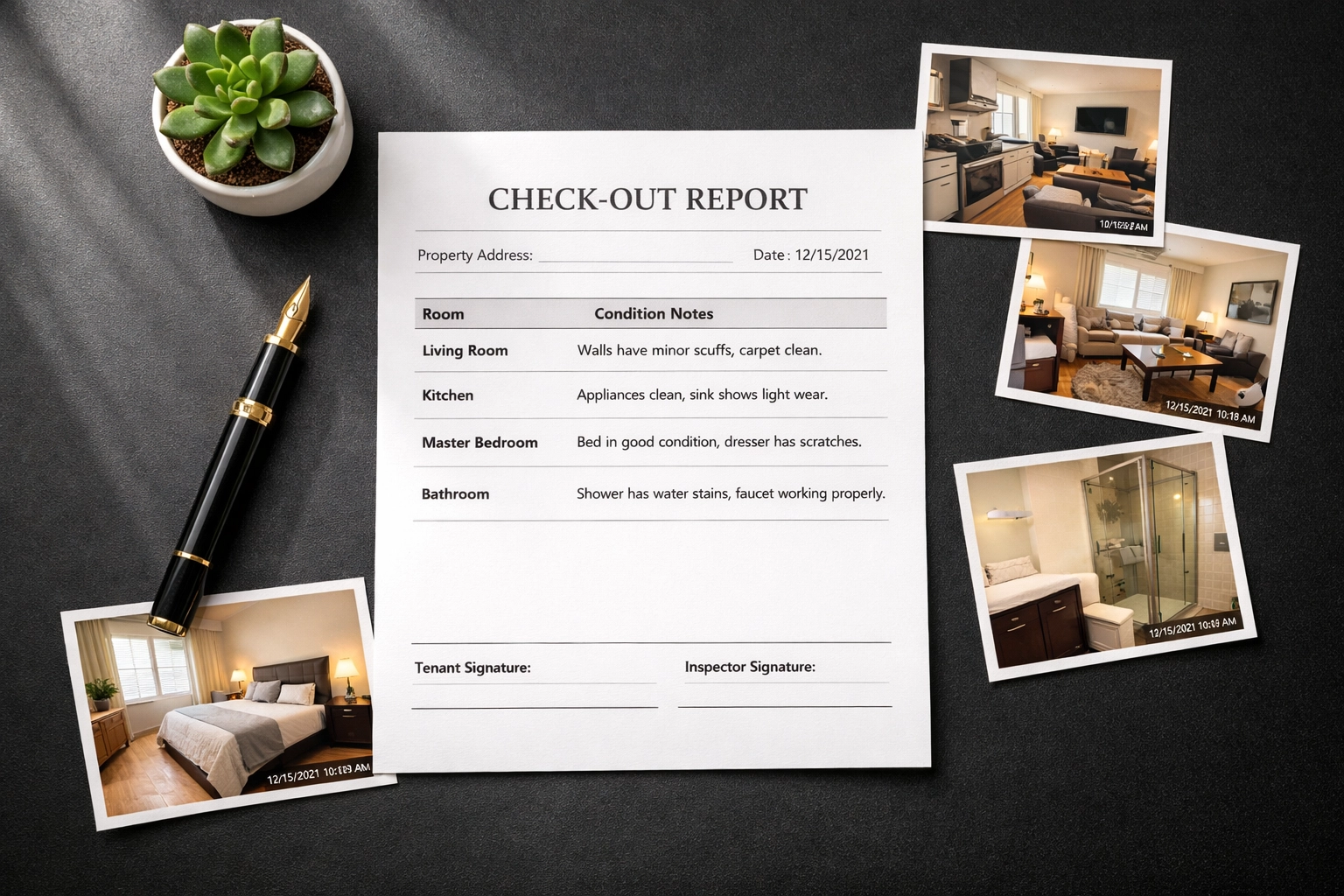
When a deposit dispute lands on an adjudicator's desk, they're not interested in what you remember about the property's condition. They want cold, hard evidence. A professional check-out report provides exactly that: a forensic comparison between the property's condition at move-in versus move-out.
Under current deposit protection legislation, the burden of proof falls squarely on your shoulders. You must demonstrate that any deductions you're claiming are justified, proportionate, and directly linked to tenant-caused damage beyond fair wear and tear. Without a detailed check-out report backed by timestamped photographs and comprehensive descriptions, you're fighting with one hand tied behind your back.
Consider what happens when you can't substantiate your claims. The adjudicator rules in the tenant's favour, the full deposit gets returned, and you're left explaining to your landlord client why their property needs £800 worth of repairs that won't be covered. That's not a conversation anyone wants to have.
The Cost of Cutting Corners: What DIY Check-Outs Really Cost You
Some property managers believe they can save money by conducting check-outs themselves or delegating them to junior staff. The hourly saving seems attractive until you tally the hidden costs.
First, there's the time investment. A thorough check-out of a two-bedroom flat takes between 90 minutes and two hours when done properly. That's time your team isn't spending on high-value activities like client acquisition, portfolio expansion, or relationship management. When you factor in your actual hourly rate, the "savings" evaporate quickly.
Second, consider the quality issue. Unless you're conducting check-outs daily, you lack the systematic approach and trained eye that professional inventory clerks develop over thousands of inspections. You might miss subtle changes that become significant when defending deposit deductions: scuff marks that weren't there before, slight discolouration on carpets, or minor damage to fixtures that tenants cleverly attempt to conceal.
Third: and most critically: there's the independence factor. Tenants and their representatives are far more likely to challenge check-out reports prepared by the letting agent or property manager directly involved in the tenancy. An independent, professionally prepared report from a qualified inventory clerk carries substantially more weight with deposit protection schemes.
At Evestaff Property Inventory Clerks, we've seen property managers lose deposit disputes not because they were wrong about the damage, but because their self-prepared reports lacked the credibility and detail that adjudicators demand. Since our foundation in 2012, we've built our reputation on meticulous, precision-focused documentation that stands up to scrutiny precisely because we're independent third parties with no vested interest in the outcome.
The Anatomy of a Professional Check-Out Report
Not all check-out reports are created equal. A professional report should comprehensively document every aspect of the property's condition at the end of the tenancy, room by room, with photographic evidence supporting each observation.
Your check-out report must include detailed descriptions of walls, floors, ceilings, fixtures, fittings, appliances, and outdoor spaces. It should note cleanliness levels, the condition of furnishings, and any items that are missing or damaged compared to the original inventory. Crucially, it needs to distinguish between fair wear and tear (which tenants aren't liable for) and actual damage or neglect (which they are).
Professional inventory clerks use standardised terminology and condition ratings that deposit protection schemes recognise and understand. This consistency matters enormously when your reports are being assessed by adjudicators who review hundreds of cases monthly.

The photographic evidence should be extensive, high-resolution, and timestamped. In 2026's regulatory environment, blurry mobile phone photos taken in poor lighting simply don't cut it anymore. You need crisp, well-lit images that clearly show the condition you're documenting.
Timing Matters: When to Schedule Check-Outs
One frequently overlooked aspect of check-out reports is timing. Schedule your check-out inspection for the final day of the tenancy or, at the latest, within 24 hours of the tenant vacating. Leaving it longer creates opportunities for disputes about when damage occurred or whether property condition has changed since the tenant left.
Ensure the property is completely empty before conducting the check-out. Attempting to complete a check-out whilst tenants are still moving boxes or cleaning creates incomplete documentation and potential conflict. The property should be in the state the tenant is presenting it in: cleaned (or not) to their standard, with all their belongings removed.
Provide reasonable notice to tenants of the check-out appointment. Many tenants appreciate the opportunity to be present during the inspection, though this isn't mandatory. Their presence can actually reduce disputes, as you can point out concerns directly and give them the opportunity to address minor cleaning issues on the spot.
The Comparison Process: Where Professional Expertise Shines
The true value of a professional check-out report lies in the comparison process. This is where an experienced inventory clerk's expertise becomes invaluable. They're not just documenting current condition: they're analysing the property against the original inventory and check-in report to identify every change, however subtle.
This requires a methodical approach and deep familiarity with how properties age naturally versus how tenant behaviour causes damage. An experienced clerk understands what constitutes reasonable wear and tear in a three-year tenancy versus what indicates neglect or misuse.
For example, minor scuff marks on skirting boards in high-traffic areas might be entirely reasonable after two years. However, large gouges in walls from furniture being dragged carelessly aren't. Slight fading of curtains near windows is expected. Cigarette burns aren't. Professional clerks make these distinctions confidently because they've seen thousands of properties and understand the standards that adjudicators apply.
Technology-Enhanced Reporting: The Modern Standard
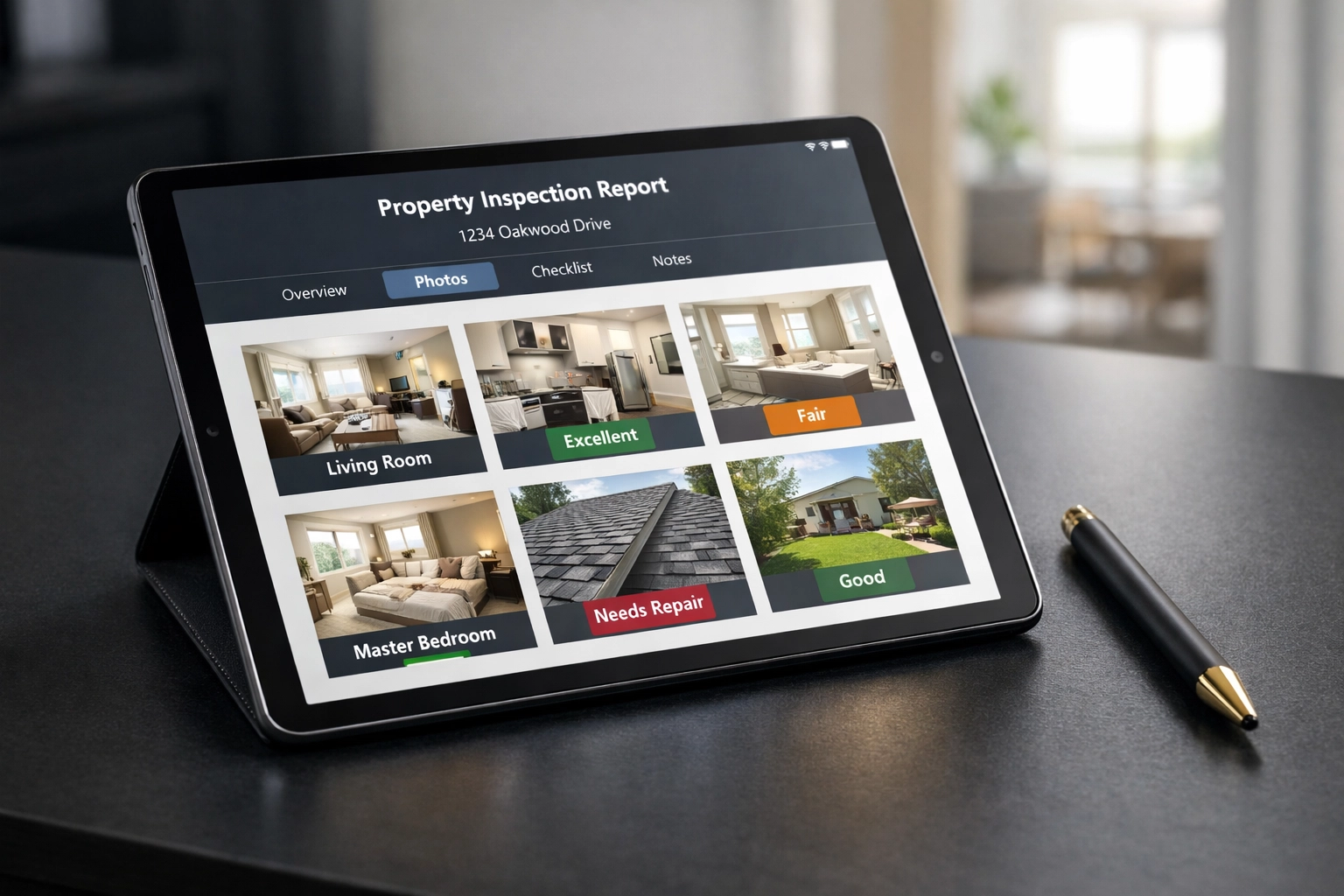
The property inventory sector has evolved dramatically over the past decade. Professional services now leverage sophisticated software platforms that integrate photography, floor plans, and detailed descriptions into comprehensive, searchable reports.
Modern inventory technology allows for side-by-side comparisons of check-in and check-out photographs, making changes immediately visible to all parties. This visual evidence is powerful when presenting cases to deposit protection schemes: far more persuasive than written descriptions alone.
Advanced reporting systems also maintain complete audit trails, showing exactly when each section of the report was completed, by whom, and under what conditions. This transparency strengthens the report's credibility and makes it virtually impossible for tenants to claim the documentation was fabricated or altered after the fact.
Reducing Vacancy Periods: The Hidden Benefit
Professional check-out reports deliver another significant advantage that property managers often overlook: they accelerate the property turnover process. When you have a clear, detailed check-out report within 24-48 hours of a tenancy ending, you can immediately identify what needs addressing before the next tenant moves in.
This rapid turnaround eliminates the guesswork and multiple property visits that occur when managers try to work from memory or hastily scribbled notes. You know precisely what cleaning is required, which repairs are necessary, and what items need replacing. This allows you to coordinate contractors efficiently and minimise void periods.
In London and Kent's competitive rental markets, every day a property sits empty costs your client money. Professional check-out reports help you fill that property faster by providing the clarity needed for swift action.
Building Your Reputation Through Professional Standards
Property management is fundamentally a relationship business. Your professional reputation determines whether landlords trust you with their investments and whether tenants view you as fair and transparent.
Consistently using professional check-out reports signals to all parties that you operate to the highest standards. Landlords appreciate that their properties are being managed with meticulous attention to detail. Tenants respect the transparent, independent documentation process, even when deposit deductions are necessary.
This reputation-building matters enormously in an industry where word-of-mouth referrals and online reviews significantly impact business growth. One mishandled deposit dispute that escalates into a public complaint can damage years of careful reputation management. Professional check-out reports provide insurance against these scenarios.

The Evestaff Difference: Precision-Focused Documentation
Since establishing Evestaff Property Inventory Clerks in 2012, we've built our service around one core principle: perfection in property documentation. Our clerks bring years of experience and systematic training to every inspection, ensuring that check-out reports meet the exacting standards that deposit protection schemes and legal proceedings demand.
We serve property managers throughout London and Kent, understanding the unique characteristics and expectations of these markets. Our technology-enhanced reporting combines traditional inventory expertise with modern digital platforms, delivering comprehensive reports that stand up to the most rigorous scrutiny.
When you partner with a professional inventory service, you're not just buying a report: you're investing in your professional credibility and your clients' financial protection.
Making the Smart Choice for Your Portfolio
The question isn't whether you can afford professional check-out reports. It's whether you can afford not to have them. Every tenancy that ends without proper documentation is a potential dispute waiting to happen, a relationship risk with your landlord client, and a threat to your professional reputation.
Property management in 2026 requires professional standards across every aspect of your service. Check-out reports aren't optional extras: they're fundamental components of competent property management. Treat them as such, invest in professional quality, and protect your business from unnecessary risk.
The properties you manage deserve nothing less than meticulous, independent documentation. Your clients expect it. Adjudicators demand it. Your reputation depends on it.
Join The Discussion