

When landlords think about essential tenancy documents, they often focus on the tenancy agreement or gas safety certificates. However, your property inventory report stands as the single most critical document that protects both your investment and your legal position throughout the entire tenancy period.
This comprehensive record serves as your primary defence against deposit disputes, provides essential evidence for legal proceedings, and ensures compliance with current tenancy deposit protection regulations. Without it, you're essentially operating blind when problems arise.
Legal Foundation for Deposit Protection
Your property inventory report forms the cornerstone of any successful tenancy deposit protection claim. Since the introduction of mandatory deposit protection schemes, adjudicators require clear, documented evidence of a property's initial condition to support any deductions from tenant deposits.
The tenancy deposit protection framework specifically relies on comparative evidence between check-in and check-out conditions. Without a detailed baseline inventory, you cannot demonstrate that damage occurred during the tenancy period, making it virtually impossible to retain any portion of the deposit legally.
Consider this scenario: a tenant moves out leaving damaged walls, but you have no documented proof of their original condition. The adjudicator will likely rule in favour of the tenant, regardless of obvious damage, because you cannot prove the walls weren't already damaged when the tenancy began.

Written Documentation Trumps Photography
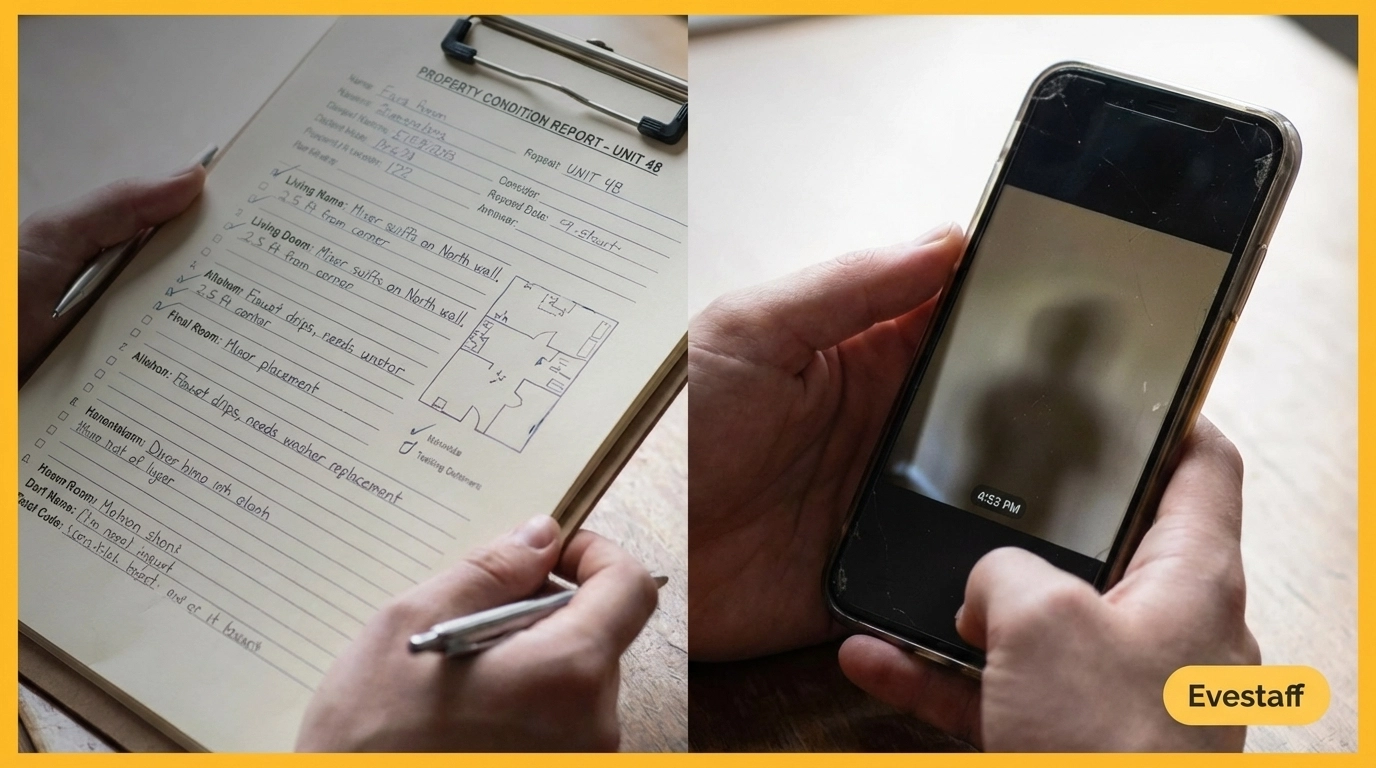
While photographs capture visual evidence, written descriptions provide the detailed context that photographs cannot convey. Your inventory for rental property should include comprehensive written observations about every aspect of each room, item, and surface.
Photographs can be misleading due to lighting conditions, angles, or image quality. They may not capture subtle scratches, minor stains, or the overall condition of surfaces. Written descriptions, however, can detail the exact nature, size, and location of existing marks or damage with precision that photographs simply cannot match.
Professional inventory clerks understand that written documentation holds more weight in legal proceedings because it provides specific, measurable details. Instead of a photograph showing "some marks on the wall," a proper written inventory states "light scuff marks approximately 2cm x 1cm located 1.2 metres from floor level adjacent to light switch."
Preventing Costly Disputes Before They Start
The majority of tenancy disputes arise from disagreements about property condition and what constitutes fair wear and tear versus tenant damage. A thorough property inventory report eliminates ambiguity by establishing clear benchmarks for acceptable condition standards.
When tenants receive a detailed inventory at move-in, they understand exactly what condition they're expected to maintain. This transparency reduces the likelihood of disputes because both parties share the same reference point for property condition expectations.
Professional landlords recognise that investing in a comprehensive inventory report saves significantly more money than the cost of potential legal disputes or lost deposit claims. One successful deposit deduction often pays for multiple inventory reports.
Essential Elements of Effective Documentation
Your property inventory report must capture specific details that generic checklists often miss. Focus on documenting the condition of paintwork, describing any existing marks, scratches, or discolouration with precise measurements and locations.
Record the cleanliness standard throughout the property, noting any areas that require attention. Document the condition of fixtures, fittings, and appliances, including their operational status and any visible wear or damage.
Include detailed descriptions of floor coverings, noting any stains, tears, or worn areas. Capture the condition of windows, including frames, sills, and glass, as these areas frequently suffer damage during tenancies.
Compliance with Regulatory Requirements
Recent regulatory changes have heightened the importance of proper documentation. The Renters' Rights Act and related housing legislation place increased emphasis on fair treatment of tenants while maintaining landlords' rights to protect their property investments.
Professional inventory services ensure your documentation meets current legal standards and provides the level of detail required for successful dispute resolution. This compliance protection becomes particularly valuable as regulations continue evolving and enforcement becomes stricter.
Your inventory report also supports compliance with other regulatory requirements, such as demonstrating due diligence in property maintenance and meeting insurance policy conditions that may require documented property condition records.
The Check-Out Comparison Process
The true value of your property inventory report emerges during the check-out process when you compare current conditions against the original baseline documentation. This comparison process determines the legitimacy of any deposit deductions and provides evidence for damage claims.
Without detailed check-in documentation, the check-out becomes meaningless because you cannot prove any changes occurred during the tenancy. Professional inventory clerks understand how to structure reports that facilitate clear, objective comparisons during the check-out process.
The comparison process also helps distinguish between fair wear and tear and tenant damage, a distinction that's crucial for legal compliance and fair treatment of tenants while protecting your property investment.

Professional Standards vs DIY Approaches
Many landlords attempt to create their own inventory reports using basic templates or smartphone cameras. However, professional inventory services provide several critical advantages that DIY approaches cannot match.
Professional clerks understand legal requirements, know which details matter most for dispute resolution, and maintain impartial perspectives that strengthen your position if disputes reach adjudication. Their experience with various property types and common issues ensures comprehensive documentation that amateur attempts often miss.
Independent professional inventory reports also carry more weight with tenants and adjudicators because they eliminate potential bias accusations that might arise from landlord-created documentation.
Common Inventory Mistakes That Cost Money
Failing to document existing damage represents the most expensive inventory mistake landlords make. Even minor scratches or marks should be recorded because tenants may worsen these areas during their tenancy, but without original documentation, you cannot prove the deterioration occurred.
Vague descriptions create problems during disputes because they cannot support specific damage claims. Avoid general terms like "good condition" or "some wear" in favour of precise descriptions that clearly define the property's exact state.
Incomplete room coverage often leaves vulnerabilities that tenants or adjudicators can exploit during dispute proceedings. Ensure every area, including storage spaces, outdoor areas, and utility rooms, receives proper documentation attention.
Protecting Your Investment Long-Term
Your property inventory report serves as more than dispute protection: it provides valuable baseline information for property maintenance planning and insurance purposes. This documentation helps you track property condition changes over time and make informed decisions about maintenance scheduling and capital improvements.
Regular professional inventories between tenancies also help maintain insurance compliance and provide evidence of proper property management practices that may benefit you in various legal or regulatory contexts.
The investment in professional inventory services pays dividends through reduced dispute costs, successful deposit claims, and improved tenant relationships built on transparent documentation practices.
Your property inventory report isn't just paperwork: it's your primary tool for protecting your investment, ensuring legal compliance, and maintaining professional standards that benefit both you and your tenants. Make it count.
Join The Discussion